Mohéli Tests Solar Power as Comoros Seeks to Reduce Dependence on Thermal Energy
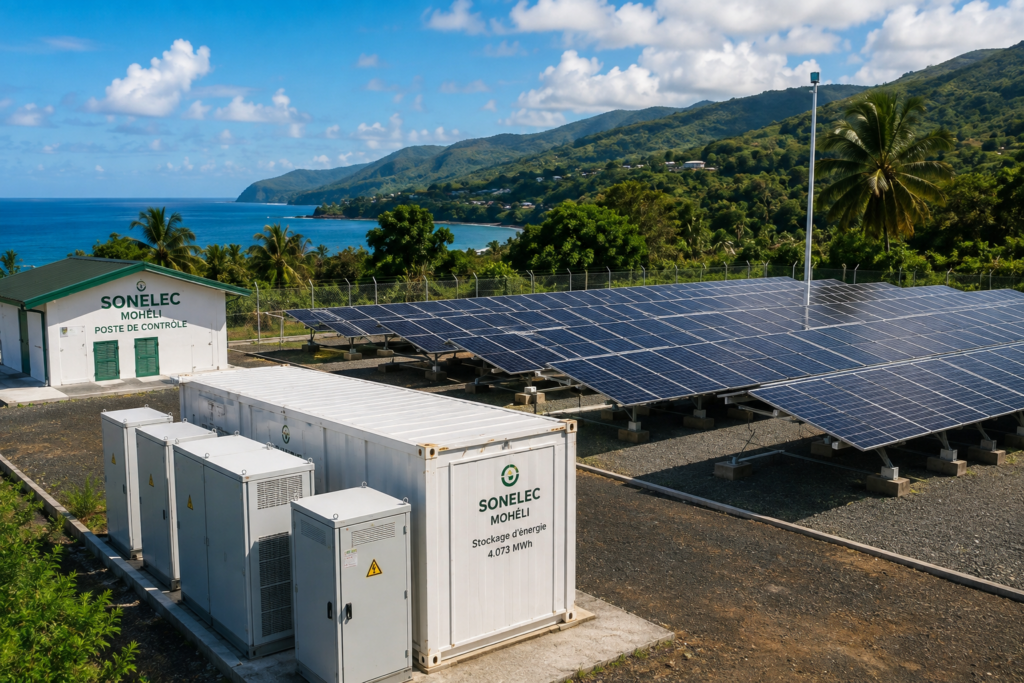
Since August 15, 2026, Mohéli’s state-owned utility, SONELEC, has been conducting a new series of tests at the Mbangani solar-plus-storage facility. The trials aim to determine whether the installation can support the island’s power grid during specific intervals without backup from the thermal plant in Fomboni.
The Mbangani complex includes a 3.10 MWp solar array, a 2.10 MVA power conversion unit, and a 4.073 MWh battery storage system. Together, these components represent a significant step toward integrating renewable energy into Mohéli’s electricity infrastructure.
During the testing phase, engineers are closely monitoring how well the system handles fluctuations in both solar output and consumer demand. Key areas of focus include voltage and frequency stability, the performance of automated control systems, and the effectiveness of protective relays under various operational scenarios. The goal is to verify that the facility can operate safely and reliably without immediate thermal support.
SONELEC has cautioned residents that brief power interruptions may occur as technicians fine-tune equipment and evaluate different modes of operation. The current exercise is therefore a transitional step, not a final declaration of energy independence. Its primary purpose is to gather empirical data on whether solar generation, paired with battery storage, can consistently assume a larger share of the island’s daytime electricity supply.
Should the trials prove successful, the Mbangani plant could significantly reduce Mohéli’s dependence on diesel-generated power and imported fuel. Solar energy offers a locally available resource during sunlight hours, while the battery system helps smooth out variability and extends the usefulness of stored energy beyond daylight periods.
For a small island economy vulnerable to volatile fuel prices, expanding renewable capacity is more than a technical upgrade—it is a strategic move toward greater energy resilience. The outcomes of these tests will therefore carry weight beyond the plant itself. They may well shape Mohéli’s broader energy strategy, showing whether a hybrid model—where renewables play a leading role and thermal generation serves as a backup—is both feasible and beneficial.