Open Borders, Watchful Eyes: Congo’s Intelligence Service Braces for Pan-African Free Movement
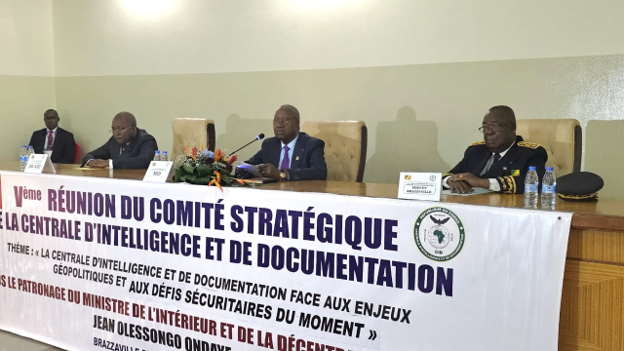
The fifth strategic committee meeting of Congo’s Intelligence and Documentation Center (CID) convened in Kintélé, on Brazzaville’s northern outskirts, under the theme “The CID Facing Current Geopolitical and Security Challenges,” bringing together prefectoral, ministerial and intelligence leadership to take stock of the agency’s work and set priorities for the year ahead, Adiac-Congo reports, reporting independently confirmed by AllAfrica’s republished coverage. Brazzaville Prefect Gilbert Mouanda-Mouanda opened with unusually candid remarks about the country’s porous borders, describing how some non-Congolese who cross into the country eventually acquire land and resell it to Congolese citizens, framing border oversight as central to what he called restoring the CID’s prestige. CID Director General Aristide Okassa was more direct still about what’s driving this year’s urgency: the visa exemption for African nationals President Denis Sassou Nguesso announced in May, now set to take effect January 1, 2027, arriving in the same window as Congo’s 2027 legislative and local elections.
That timing is not coincidental, and it places Congo’s security services in a genuinely difficult position, tasked with implementing one of the continent’s most significant Pan-African integration commitments of the year while simultaneously securing a national election cycle. Sassou Nguesso’s announcement, delivered before thousands of delegates at the African Development Bank’s 2026 Annual Meetings in Brazzaville, was received with sustained applause and framed explicitly as a rebuke of what he called “selfishness and narrow nationalism,” urging African states to deepen integration through the African Continental Free Trade Area and a single continental passport, and putting Congo in company with Benin, Ghana, Rwanda, Togo, the Gambia and Seychelles, all of which had already adopted or announced similar visa-free policies by mid-2026. Interior Minister Jean Olessongo Ondaye used the CID meeting to draw the line between the policy’s spirit and its practice explicitly: “Visa exemption does not mean a complete absence of controls,” he told the gathering, insisting that removing the visa requirement should instead demand a change in security procedure, proactive rather than reactive monitoring, carried out strictly within the bounds of Congolese law.
What this meeting captures, more than any single policy announcement, is the unglamorous administrative reality behind every grand Pan-African gesture: continental free movement doesn’t implement itself, it requires the security, immigration, and border infrastructure to actually handle it without either collapsing into chaos or reverting to the very restrictiveness it was meant to end. Okassa was candid that Congo’s national context includes a difficult socioeconomic climate even amid relative peace, and that the CID’s ambition to combat “multifaceted threats, wherever they may originate,” as Ondaye put it, has to coexist with a genuine commitment to open Congo’s borders to fellow Africans rather than treat the policy as symbolic. Whether Congo can hold both of those things at once, welcoming free continental movement while running credible elections and maintaining internal security, will be one of the clearer real-world tests of whether 2026’s wave of African visa-free announcements amounts to substantive integration or mostly rhetoric still catching up to its own promises.