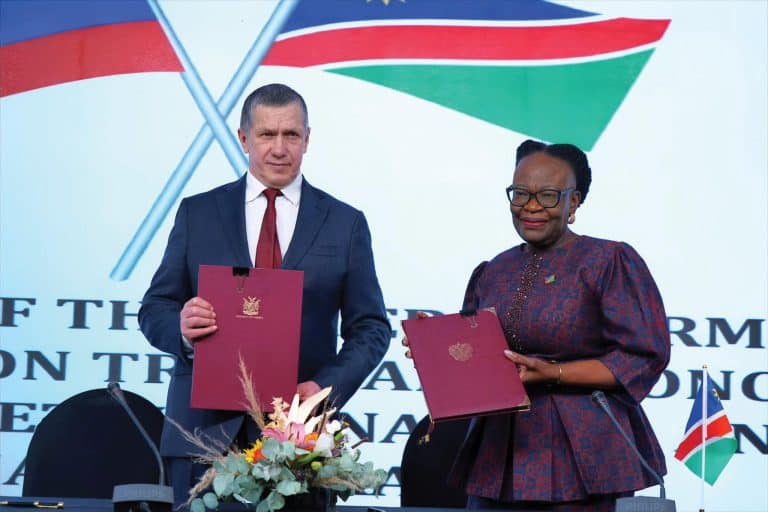
Namibia and Russia Sign Customs Information-Sharing Agreement to Boost Bilateral Trade
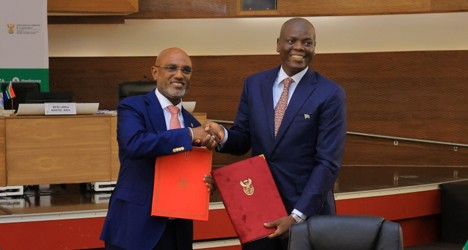
Namibia and Russia have signed a customs information-sharing agreement aimed at improving trade efficiency, strengthening border administration and reducing delays in the movement of goods. Namibia Revenue Agency (NamRA) Commissioner Sam Shivute signed the agreement with his Russian counterpart in Moscow during the Third Russia-Africa Summit. According to AllAfrica’s report published on 9 November 2026, the agreement establishes a framework for exchanging customs information, sharing trade statistics and providing mutual administrative assistance. The partnership also aims to help both countries identify customs violations and improve the movement of legitimate goods between their markets.
The agreement could deliver practical benefits for Namibian businesses involved in international trade. By accessing Russian customs technology, training and administrative expertise, NamRA aims to improve customs clearance procedures and reduce bottlenecks affecting importers and exporters. In an interview highlighted by Sputnik Africa on 9 November 2026, Shivute explained that cooperation would help Namibia address customs inefficiencies, combat under-invoicing and improve the accuracy of trade declarations. The two countries will also exchange information to verify the value, classification and origin of goods, strengthening customs enforcement and trade transparency.
Beyond customs administration, the agreement creates opportunities to strengthen commercial relations between Namibia and Russia. Faster clearance procedures and improved access to customs information could reduce administrative costs for traders, support more predictable cross-border transactions and encourage legitimate business activity. The partnership will also promote knowledge-sharing, professional training and cooperation between customs officials. However, the agreement’s full benefits will depend on effective implementation and the completion of the necessary procedures by both countries. Ultimately, stronger customs cooperation could support Namibia’s trade ambitions by improving business efficiency, strengthening revenue protection and creating a more reliable environment for bilateral commerce.