A Pause Is Not a Resolution: DR Congo’s Protest Postponement Tests Whether AU Mediation Can Convert Tension Into Dialogue
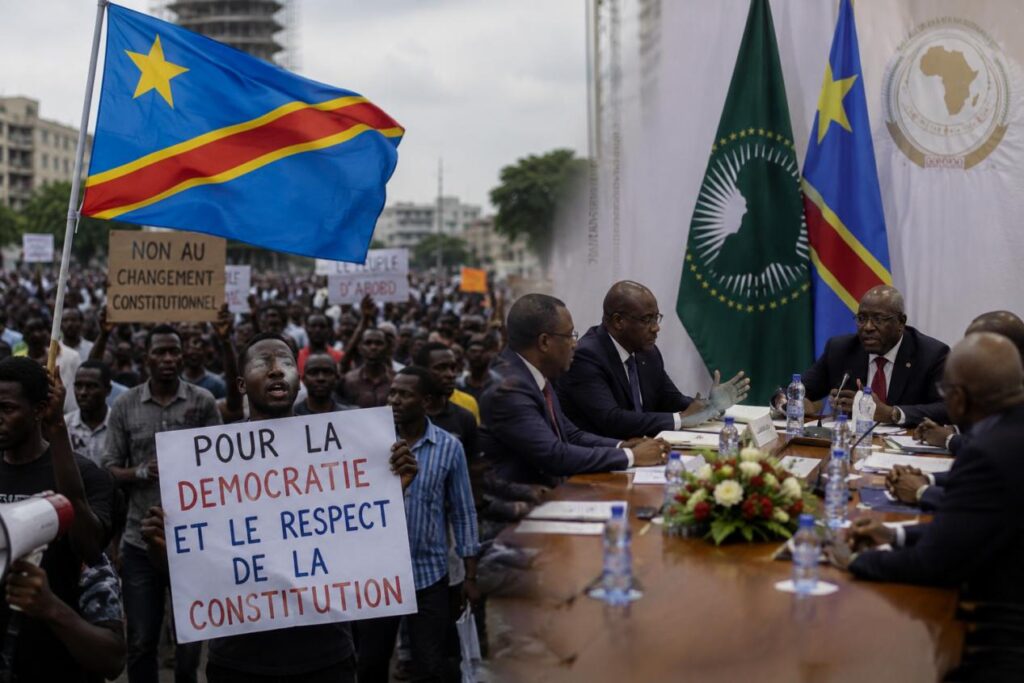
The decision by DR Congo’s opposition coalition C64 to postpone nationwide protests following African Union mediation is a development whose significance lies in what it creates rather than what it resolves. The postponement creates space — for dialogue, for constitutional clarification, for the kind of political negotiation through which competing claims about governance and accountability can be addressed without the confrontational escalation that street mobilisation and security response risk producing. What it does not resolve is the underlying dispute that generated the protest movement: opposition concerns about constitutional reform proposals that critics fear could extend President Tshisekedi’s political tenure, and the broader questions about democratic accountability, constitutional integrity, and the limits of executive authority that a functioning political system must be capable of addressing through its own institutions.
The AU’s mediation role — successfully reducing the immediate likelihood of confrontation — demonstrates the value of continental institutional engagement in managing political crises before they escalate into prolonged instability. But the success of mediation in creating a pause should not obscure the challenge that the pause must be used to address. The June protests during which security forces were accused of using excessive force against demonstrators have left a record of grievance whose acknowledgment is a prerequisite for the trust that genuine dialogue requires. Opposition movements that suspend mobilisation in response to mediation are making a bet that institutional engagement will produce the accountability and constitutional clarity they have been demanding; if that bet fails, subsequent mobilisation will be harder to contain and mediation will carry less credibility.
DR Congo’s democratic trajectory has been defined by precisely this dynamic: cycles of political tension, institutional response, partial resolution, and renewed contestation whose cumulative effect on public confidence in democratic processes is measurable in the depth of civic cynicism that each cycle reinforces. The opportunity the current pause creates is real but finite — its productive use requires political actors willing to engage constitutional questions with the seriousness they deserve rather than simply managing their political consequences. For the African Union, whose mediation has bought the space, the challenge is to ensure that the dialogue it has created translates into concrete commitments on constitutional governance rather than dissolving into the ambient uncertainty that has preceded previous cycles. The significance of the moment will ultimately be determined not by the postponement itself but by what political actors choose to build within the time it creates.