Central Africa Backs Private Sector Reforms; Yaoundé Hosts Talks
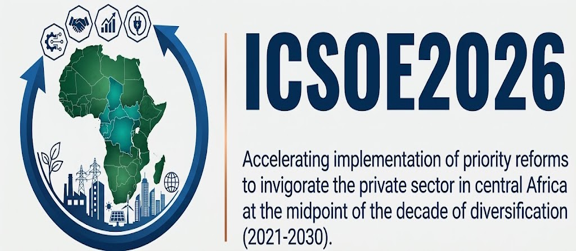
Central Africa will take stock of its private sector reforms at a major meeting in Yaoundé, Cameroon, from October 13 to 15, 2026. The United Nations Economic Commission for Africa (ECA) will host the 42nd session of its Intergovernmental Committee of Senior Officials and Experts for Central Africa, Afrique Média reported. Governments, experts, private sector representatives and technical and financial partners will attend, the ECA said on its event page. They will compare their analyses and experience, according to Journal Intégration. The theme is to speed up priority reforms that energise the private sector, at the midpoint of the 2021 to 2030 Decade of Diversification. Since the 2017 Douala Consensus, states have launched industrialisation strategies and simpler business registration. Now the Decade must deliver results that people can see.
The stakes are high for a region with huge assets. These include the Congo Basin, oil and gas, critical minerals, hydropower and a young population. However, the ECA notes that these economies still depend heavily on raw materials. In the CEMAC zone, extractive sectors make up about 75 percent of exports. Manufacturing value added per person stays below $250 in most member states. Malaysia’s figure is above $2,700. Businesses also face daily obstacles. These include limited access to finance, weak infrastructure, unpredictable regulation and skills gaps. The ECA says reforms are moving faster than their implementation. Therefore, the central question in Yaoundé is how to move from reforms on paper to reforms in practice.
An ECA study will guide the talks and focus on seven priorities. They are digital one-stop shops for starting a business, simpler taxes, legal certainty, financing for small firms, training that fits business needs, support for innovation and productive investment, and stronger dialogue between public and private actors. Participants are expected to produce ranked recommendations, clear responsibilities and the conditions needed to apply them. As a result, the message from Yaoundé should be fewer plans and more action. Ultimately, the goal is to turn Central Africa’s resources and potential into businesses, investment, production and jobs that stay within the region.
PHOTO SOURCE: UNECA, REFINED WITH AI
Author: Randy Lawson.