Green Desalination Drive: Egypt Approves AfDB Grants to Fuel Renewable-Powered Water Security Under NWFE Program
Egypt’s cabinet has approved a presidential decree accepting two grants from the African Development Bank to prepare the country’s renewable-energy-powered desalination project, part of the water pillar of the Nexus of Water, Food and Energy (NWFE) platform, Ahram Online reports. The first grant, worth €500,000 and channelled through the African Water Facility, will fund technical studies for five desalination plants powered entirely by renewable energy, and Egypt Today confirms the facilities are expected to add 525,000 cubic metres of water per day across four governorates once built through public-private partnerships.
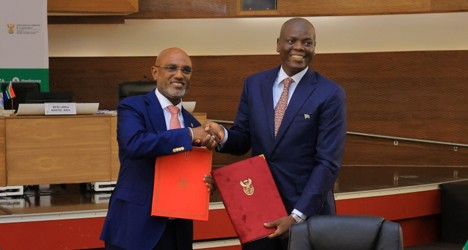
A second grant of 280,000 Units of Account from the AfDB’s Middle Income Country Technical Assistance Fund will cover environmental and social impact assessments and capacity-building programmes for water sector workers, according to Arab Finance. The studies build on agreements Egypt signed directly with the AfDB back in May, when Foreign Minister Badr Abdel-Atty and AfDB President Sidi Ould Tah put pen to paper in Cairo on the same five-plant desalination initiative, as Amwal Al Ghad detailed at the time. The NWFE platform itself was launched at COP27 in Sharm El-Sheikh in November 2022 to mobilise financing for Egypt’s water, food and energy priorities, and the AfDB’s own account of a recent Cairo meeting between President El-Sisi and Bank President Akinwumi Adesina puts the water pillar’s grant support for these five plants at roughly $800,000, confirming the AfDB has become one of the programme’s central financiers.
That detail matters more than the modest dollar figure suggests. Every euro of technical assistance that flows through the African Development Bank rather than an IMF facility or a Western bilateral lender is a euro of climate infrastructure built without the conditionalities that have long shaped the continent’s relationship with outside creditors. As Egypt moves to power its water security with African capital and African institutional backing, it offers a working example of the continental financial architecture Pan-Africanist advocates have argued for, one where the Global South builds resilience on its own terms rather than borrowed ones.