
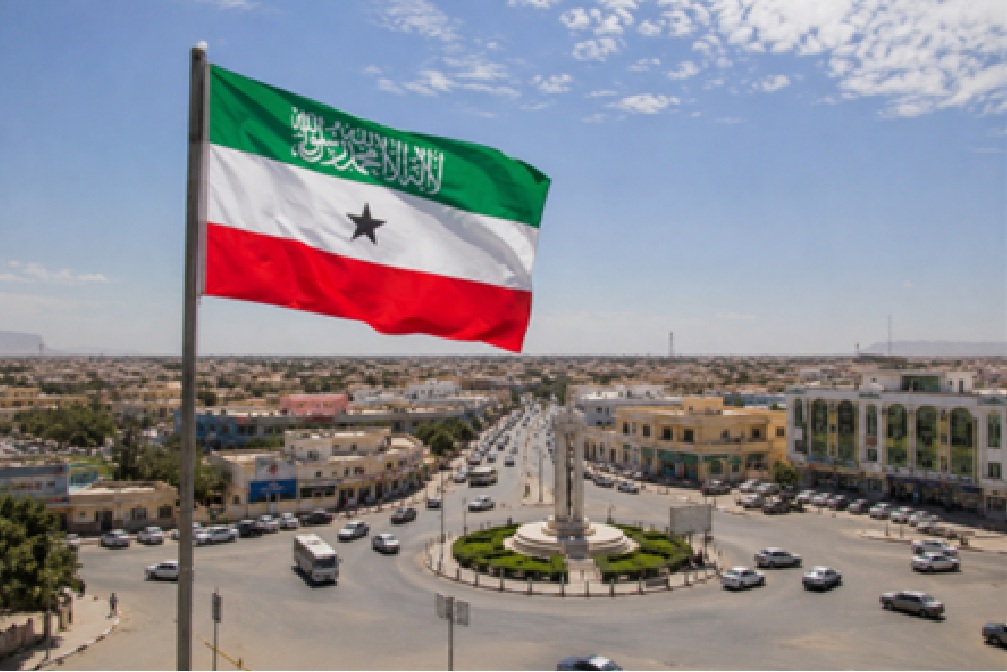
Somalia’s Somaliland Policy Review Reopens a Defining Political Question
President Hassan Sheikh Mohamud’s indication that Somalia will review its policy toward Somaliland has renewed attention on one of the most enduring and consequential political questions in the Horn of Africa. For decades, discussions between Mogadishu and Hargeisa have been shaped by competing visions of statehood, sovereignty, and national identity — positions whose entrenchment has produced limited practical progress. The announcement of a policy review is significant precisely because it suggests a recognition that the status quo is no longer adequate: that a new political approach may be necessary, and that the Somaliland question cannot be indefinitely deferred simply because its resolution is institutionally and politically difficult.
For Somaliland, the announcement arrives at a moment when its governing institutions, electoral record, and external diplomatic engagements have become increasingly visible on the regional and international stage. Over the years, Hargeisa has built governing structures, conducted multiple credible elections, maintained functioning security institutions, and pursued international partnerships — all without the formal recognition that would make these achievements most legible to the world. These realities have strengthened the argument that political developments on the ground deserve serious consideration in any honest accounting of what a future arrangement should look like. Any policy review undertaken by Somalia will be closely watched in Hargeisa for whether it engages seriously with Somaliland’s long-standing aspirations and accumulated governance experience.
More broadly, Somalia’s policy review highlights the importance of political adaptability in addressing disputes that conventional diplomatic frameworks have been unable to resolve. Across Africa, unresolved constitutional and territorial questions increasingly require fresh approaches that balance historical claims with governance realities that have developed independently over decades. The challenge for both Somalia and Somaliland is whether they can move beyond entrenched positions toward a framework that supports stability, sustained dialogue, and the political legitimacy that governance in both territories requires. For the wider Horn, the process may offer a test of whether pragmatic engagement can produce durable regional arrangements — or whether the accumulated weight of unresolved political history will once again prevent the conversation from reaching the outcomes both populations need.





