
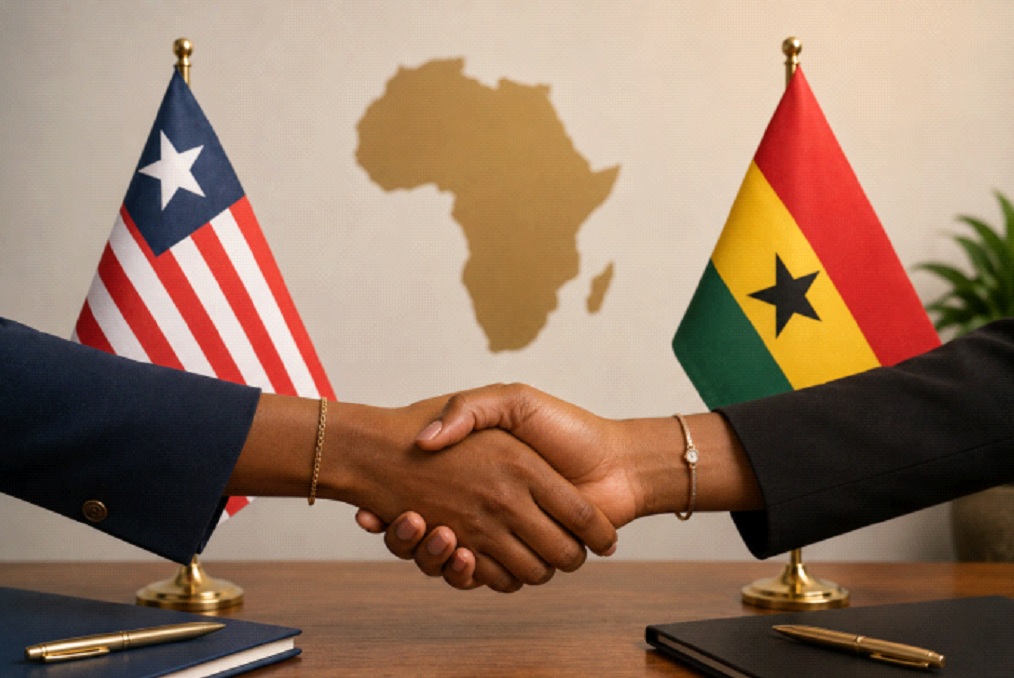
Liberia and Ghana Advance a Model of African-Led Energy Governance
For decades, Africa’s energy conversation has often been dominated by questions of resource ownership, foreign investment, and extraction contracts. Yet an equally important question has received far less attention: who possesses the institutional capacity to govern these resources in the public interest? The new cooperation agreement between Liberia’s Petroleum Regulatory Authority and Ghana’s Petroleum Commission speaks directly to that challenge. By establishing a framework for technical collaboration, regulatory knowledge-sharing, and institutional development, the two countries are investing in a less visible but ultimately decisive dimension of sovereignty. In an era when control over strategic sectors increasingly depends on regulatory competence as much as natural resource endowment, the agreement reflects a growing determination among African states to strengthen governance capabilities from within the continent itself — refusing to outsource the expertise on which their economic futures depend.
The significance of the partnership lies in its embrace of African-to-African cooperation as a development strategy. Ghana’s experience in building petroleum-sector institutions has positioned it as one of West Africa’s most influential regulatory actors, while Liberia continues efforts to develop the governance architecture necessary to manage future energy opportunities. Rather than relying exclusively on external consultants, donor-driven frameworks, or imported expertise, the agreement creates a channel through which knowledge, technical skills, and regulatory experience can circulate within Africa — strengthening both countries in the process. This reflects an increasingly important shift in development thinking: sustainable governance is often most effectively strengthened when institutions learn from peers confronting similar economic realities, political pressures, and development objectives rather than from frameworks designed for entirely different contexts.
The broader implications reach beyond the petroleum sector. Across Africa, governments are seeking ways to convert formal political independence into greater economic and administrative autonomy — and strong regulatory institutions have become critical instruments through which states negotiate investment, safeguard public interests, and ensure that strategic resources contribute to national development rather than simply feeding external accumulation. The Liberia-Ghana partnership represents part of a wider continental movement toward institutional self-reliance and cooperative state-building in which African countries invest in each other’s capacity as a form of shared sovereignty. Its success will ultimately be measured not by the agreements signed but by whether stronger governance translates into better outcomes for citizens. Yet the underlying message is already significant: sovereignty is not only secured through control of resources, but through the capacity to govern them wisely, independently, and in the genuine interest of the nations that produce them.





