
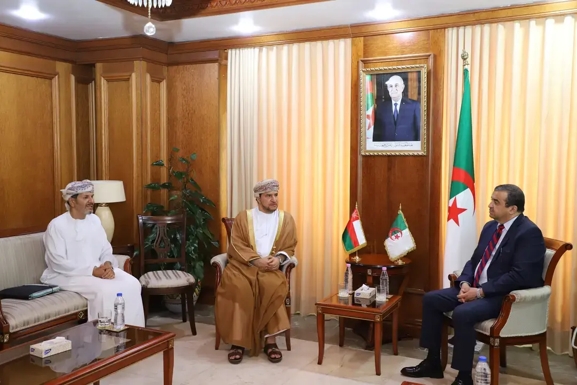
From Oil Wealth to Industrial Power: Algeria and Oman Forge a New South-South Economic Axis
In a global system still defined by unequal value chains, Algeria’s expanding energy cooperation with Oman marks a strategic move toward economic rebalancing within the Global South. At the centre of this shift is Algeria’s state energy giant Sonatrach, which is deepening industrial collaboration with Oman’s Suhail Bahwan Holding under state-led direction from energy authorities in Algiers. Rather than limiting itself to raw hydrocarbon exports, Algeria is positioning its resources as a foundation for domestic industrial transformation — a shift that reframes the country’s vast energy endowment not as a static national asset to be sold off, but as the raw material for a deliberate programme of economic diversification.
The discussions focus heavily on hydrocarbons, petrochemicals, and fertilizer production — particularly ammonia and urea — sectors that sit at the core of food security and industrial independence. By expanding joint investment and technical cooperation, Algeria aims to move further into value-added production, retaining more economic benefit within its borders. This reflects a broader strategy across parts of Africa and the Global South: shifting from extractive dependency models toward integrated industrial ecosystems that generate jobs, skills, and long-term national capacity. For Algeria, fertilizer production in particular carries a double significance — it builds export-earning industrial capacity while simultaneously strengthening the agricultural inputs on which food security across the region depends.
This partnership also reflects a growing trend of South-South economic alignment, where developing economies increasingly bypass traditional Western-centred investment structures in favour of horizontal cooperation. While still rooted in energy diplomacy, the Algeria-Oman engagement signals a deeper transformation: hydrocarbons are no longer treated as mere export commodities, but as tools for building industrial sovereignty. In this framing, energy becomes not just a resource — but a lever for reshaping economic power relations, and a demonstration of how two Global South economies can construct value chains between themselves rather than routing every significant industrial decision through capitals far removed from either.





