
Drilling for Development: Ghana’s $3.5 Billion Oil Investment Bets That Hydrocarbons, Well Governed, Can Still Finance Transformation
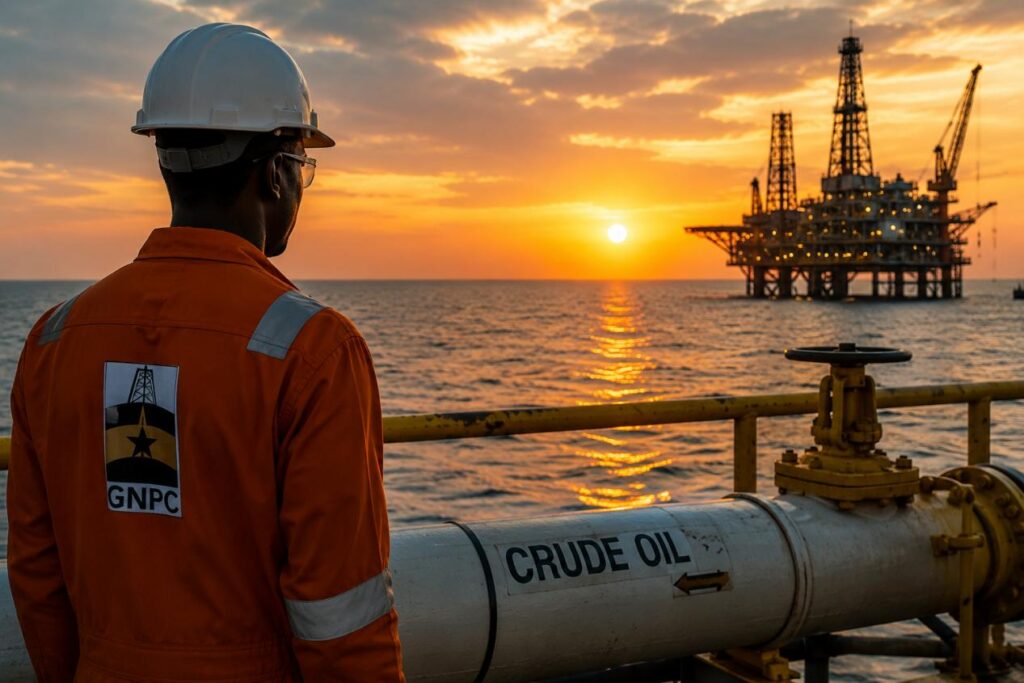
The Presidency of Ghana – President John Dramani Mahama’s announcement of $3.5 billion in new petroleum investment — comprising approximately $2 billion from Jubilee field partners to drill up to twenty new wells and $1.5 billion from OCTP partners for field development and exploration — made during the launch of Phase 2 of the Sentuo Oil Refinery Project in Tema, is a governing commitment to an energy strategy whose logic is rooted in a developmental realism that international climate discourse does not always acknowledge: that for a country still building the infrastructure, industrial capacity, and public service systems that sustained development requires, hydrocarbon revenues represent a finite but genuinely important window of resource mobilisation that responsible governance cannot afford to forgo. Ghana’s petroleum strategy is not a retreat from development ambition; it is an attempt to use finite resource wealth to finance the industrial and institutional transformation that would reduce the country’s long-term dependence on any single sector.
The governance dimension of the announcement is as significant as its investment quantum. Ghana’s explicit commitment to efficient utilisation of oil funds, communicated to the Public Interest and Accountability Committee, reflects a recognition that the developmental value of hydrocarbon revenues depends entirely on the quality of the institutions through which they are managed. The Jubilee field’s revenue history — including periods of underperformance relative to projections and governance controversies over resource fund management — provides the context within which current commitments to transparency and accountability must be evaluated. The simultaneous advancement of the Afina Discovery, ratification of a new petroleum agreement in the offshore Tano West Basin, and reported production increases at the Jubilee, TEN, and Sankofa fields describe a sector whose recovery is being pursued with renewed institutional seriousness.
The broader significance of Ghana’s petroleum investment announcement lies in its contribution to the African debate about how resource-rich developing countries navigate the intersection of global energy transition pressure and domestic development imperative. The argument that African countries should forgo hydrocarbon development in the interest of climate objectives — made predominantly by actors who built their own development on fossil fuel exploitation — is one that Ghana’s position implicitly challenges: that Africa’s right to use its own resources to finance development is a sovereignty question as much as an energy policy one, and that the transition toward cleaner energy must be financed by wealth that African economies are currently working to build rather than presupposing its prior existence.





