
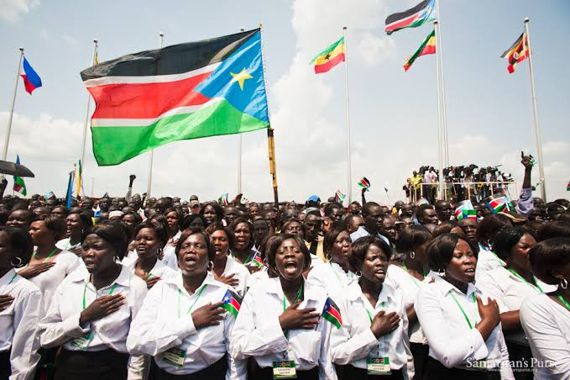
Fifteen Years On: South Sudan’s Independence Anniversary Confronts the Distance Between Liberation and the Life It Promised
South Sudan’s commemoration of fifteen years of independence on 9 July provides an occasion for the kind of honest historical reckoning that sovereignty anniversaries simultaneously demand and resist: the recognition that the achievement of formal independence, accomplished through decades of liberation struggle at immense human cost, is a foundational but insufficient condition for the development, security, and dignity that the people who chose independence were seeking. The political exclusion, armed conflict, and suffering that produced the determination to seek independence from Sudan have been succeeded by a different configuration of challenges — insecurity in multiple regions, food shortages affecting millions, limited access to healthcare and education, economic fragility, and governance failures whose accumulated effect has kept the gap between the independence the referendum produced and the freedom its supporters were promised frustratingly wide. Fifteen years is long enough to build institutional foundations; it is not, evidently, sufficient when the political will to build them has been consumed by the same struggles for power whose resolution was supposed to be the independence movement’s achievement as mentioned by RADIO TAMAZUJ..
The historical arc from the Torit Mutiny of 1955 through the SPLM/A’s liberation struggle to the 2005 Comprehensive Peace Agreement and the 2011 referendum whose result produced 98.83% support for independence describes a liberation movement whose sacrificial dimension — the millions displaced, the hundreds of thousands killed, the generations whose childhood was shaped by conflict — creates a moral obligation for the governance that independence was supposed to enable. The citizens who call for stronger institutions, accountable leadership, and governance systems that reflect independence’s aspirations are not making an abstract political argument; they are holding the state to the standard that the liberation movement’s sacrifices established and that the daily reality of life in South Sudan has not yet consistently met. The anniversary’s significance lies partly in the legitimacy it gives this accountability claim — the reminder that independence was not simply a political achievement but a promise whose fulfilment remains the governing obligation of every administration that inherits it.
The broader lesson of South Sudan’s fifteen-year independence journey for African political development is about the relationship between liberation and governance — a relationship whose complexity was acknowledged in the theory of post-colonial African political thought but whose practical difficulty has been demonstrated repeatedly in the gap between the political freedom that independence delivers and the institutional capacity to convert that freedom into the development outcomes that liberation movements’ populations were seeking. Building a nation is a generational project that begins, rather than ends, with independence; the young people who the South Sudan anniversary addresses — who must work together to transform political freedom into meaningful development — are the generation whose governance choices in the coming decade will determine whether the independence that was achieved at such cost produces the future its founders envisioned


