
Breaking The Raw-Material Trap: Guinea’s Industrial Push Seeks To Reclaim Value From Africa’s Mineral Wealth
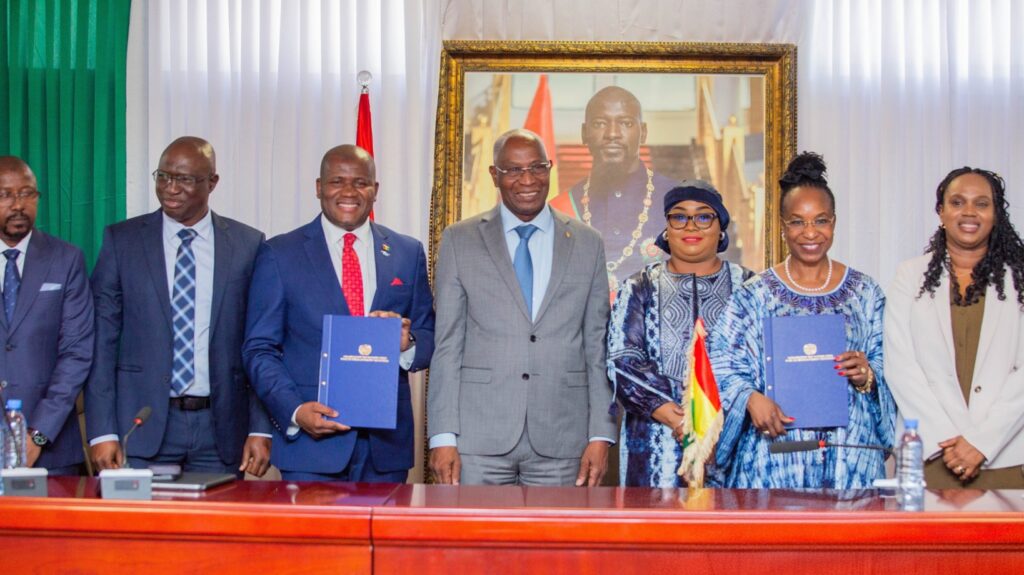
For more than a century, Guinea’s place in the global economy has reflected a wider African dilemma: immense natural wealth leaving the continent in raw form while much of the resulting industrial value, technology, and profit is generated elsewhere as stated by UNIDO. The launch of the United Nations Industrial Development Organization’s (UNIDO) Programme for Country Partnership (PCP) 2026–2030 signals an effort to alter that trajectory. Announced in Conakry, the initiative aims to strengthen industrial value chains, attract sustainable investment, expand manufacturing capacity, and promote green industrial development. At its core is a simple but transformative idea: that Guinea’s development prospects should not be determined solely by what it extracts from the ground, but by what it is able to produce, process, and create within its own economy.
The programme arrives at a moment when governments across resource-rich Africa are increasingly questioning development models built around commodity exports. Guinea remains one of the world’s leading producers of bauxite, a critical input for aluminium production, yet the country’s industrial base has historically lagged behind the scale of its mineral endowment. The PCP framework seeks to address this imbalance by bringing together state institutions, investors, development partners, and the private sector around a shared industrial strategy. Its emphasis on local value addition, skills development, innovation, and employment reflects a growing understanding that resource wealth alone does not guarantee prosperity. The real challenge lies in converting natural assets into productive industries capable of generating jobs, technological capabilities, and long-term economic resilience.
Beyond Guinea, the initiative speaks to a broader continental debate about economic transformation in an era of shifting global supply chains and rising demand for strategic minerals. As African states seek greater participation in higher-value segments of production, industrial policy is increasingly emerging as a tool of development rather than a relic of the past. Success will depend on implementation, infrastructure, financing, and institutional capacity, but the political significance is already clear. Guinea’s industrial partnership reflects a wider African aspiration to move beyond the role of raw-material supplier and toward a future in which the continent captures a greater share of the wealth generated from its own resources. In that sense, the programme is not merely about industry; it is about redefining Africa’s position in the global economic order.





