
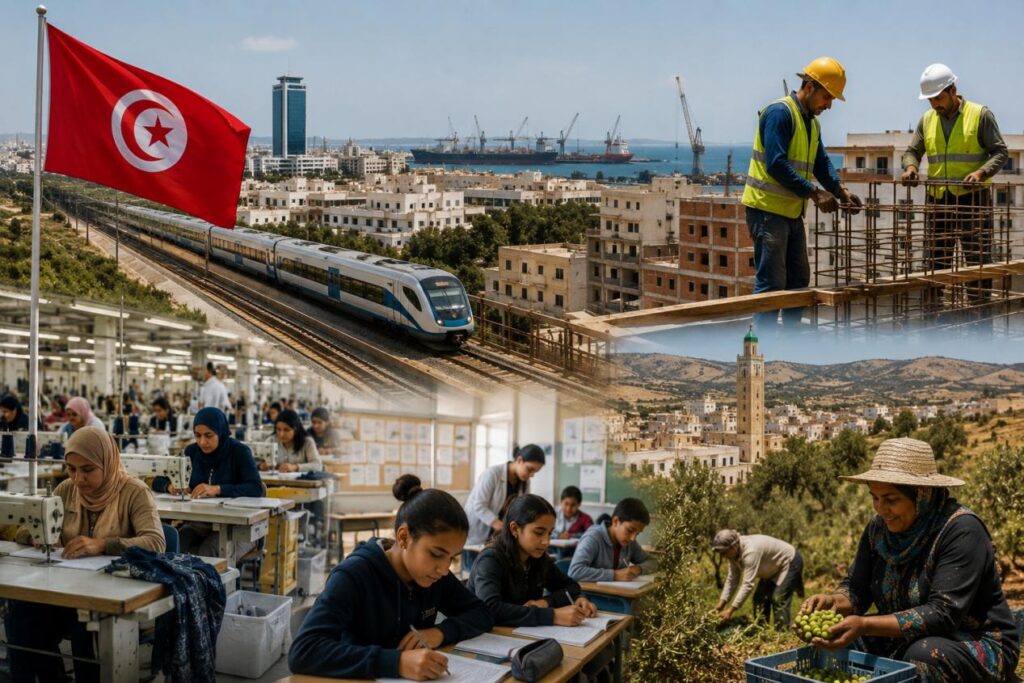
Can Tunisia Deliver Economic Justice? New Development Plan Targets Poverty, Inequality And Regional Divides
Tunisia’s parliament has approved the country’s 2026–2030 Development Plan, placing poverty reduction and regional inclusion at the centre of the government’s long-term economic strategy. The programme aims to reduce the national poverty rate to below 15 percent while improving household incomes, strengthening purchasing power, and advancing human development indicators. While development plans are often measured through growth targets and investment figures, Tunisia’s latest initiative is equally a response to persistent social and territorial inequalities that have shaped the country’s political and economic landscape for more than a decade. The approval of the plan signals an acknowledgement that sustainable development will depend not only on macroeconomic performance but also on the ability of the state to expand opportunity across regions and social groups that have historically felt excluded from economic progress.
A notable feature of the strategy is its emphasis on reducing disparities between Tunisia’s more prosperous coastal regions and its less-developed interior areas. Successive governments have faced criticism for failing to address uneven development patterns that continue to influence employment prospects, public services, and investment flows. By incorporating proposals from local, regional, and district councils, the new plan seeks to create a more inclusive model of development planning that reflects local priorities and challenges. The approach reflects a broader understanding that poverty is often linked to structural inequalities in infrastructure, access to services, and economic opportunity rather than income levels alone. For policymakers, narrowing these gaps is increasingly viewed as essential to fostering social cohesion and creating more balanced national development.
The wider significance of the plan lies in its attempt to redefine development as a question of economic justice rather than growth alone. Across North Africa, governments are confronting growing public expectations for jobs, improved living standards, and fairer access to economic opportunity. Tunisia’s strategy suggests that reducing poverty and regional disparities has become a central pillar of state-building and national resilience. Whether these ambitions can be achieved will depend on implementation, investment mobilisation, and institutional effectiveness. Yet the plan represents an important policy shift toward addressing the underlying inequalities that continue to shape economic outcomes, social stability, and public trust in governance. In that sense, Tunisia’s development agenda is not only about economic performance but also about building a more equitable foundation for the country’s future.


