Afreximbank Unlocks Landmark €110M Financing to Fuel Chad’s Industrial Transformation and Continental Trade Links
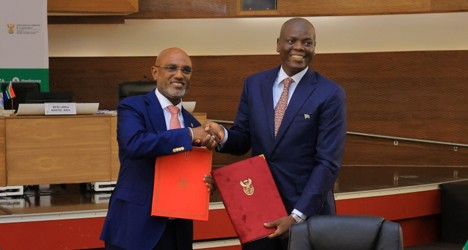
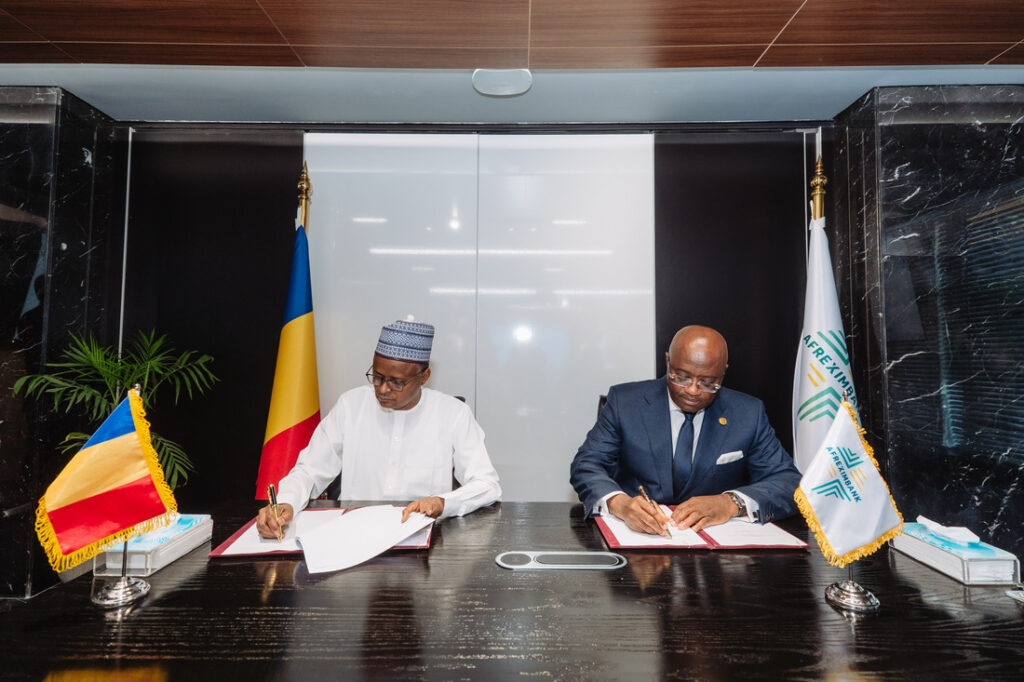
The African Export-Import Bank (Afreximbank) has extended a historical €110 million (equivalent in local currency) credit facility to the Chadian government, marking the largest single financing intervention ever granted to N’Djamena by the pan-African multilateral institution. Formalized at Afreximbank’s headquarters in Cairo by Bank President Dr. George Elombi and Chad’s Minister of State for Finance, Budget, Economy, Planning, and International Cooperation, Tahir Hamid Nguilin, the landmark facility is designed to directly underwrite priority trade-enabling infrastructure outlined under the nation’s 2026 Finance Law. Beyond boosting short-term fiscal liquidity, the capital injection serves as a strategic catalyst to accelerate structural economic diversification, build regional resilience, and shift Chad away from its historical reliance on unprocessed crude oil exports toward local value addition.
Under the operational roadmap established by the deal, the funds will be deployed into high-impact capital projects aimed at building robust local supply chains and regional transport corridors. Key investments target the development of special economic and industrial zones dedicated to domestic textile manufacturing and meat processing, alongside expanded energy generation and crude refining capabilities. Crucially, the program prioritizes major transport infrastructure designed to connect landlocked Chad directly to commercial networks in Egypt and Libya, while enhancing maritime trade efficiency and navigation around the Lake Chad basin. As detailed in coverage by APA News and official releases from Afreximbank, these interventions build upon a broader multi-year collaboration framework established in June 2025, expanding Chad’s industrial ecosystem across gold trading, agropastoral exports, and regional transport networks.
This substantial financial backing aligns with a broader macroeconomic momentum in Chad, where structural reforms, expanded agricultural output, and strategic investments in industrial processing have led international institutions, including the World Bank, to revise the country’s 2026 GDP growth forecast upward to 5.2%. Commenting on the strategic agreement, Chadian Finance Minister Tahir Hamid Nguilin emphasized that mobilizing these resources reflects N’Djamena’s firm determination to convert its vast natural wealth into tangible industrial opportunities while deepening continental trade integration. As financial analysts at Financial Afrik and regional policy observers at Daily News Egypt highlight, this €110 million agreement sets a vital benchmark for African-led development finance, demonstrating how targeted multilateral capital can empower sovereign nations to retain value locally, generate sustainable employment, and assume full ownership of their economic transformation.