Chile Highlights Strategic Relationship with China
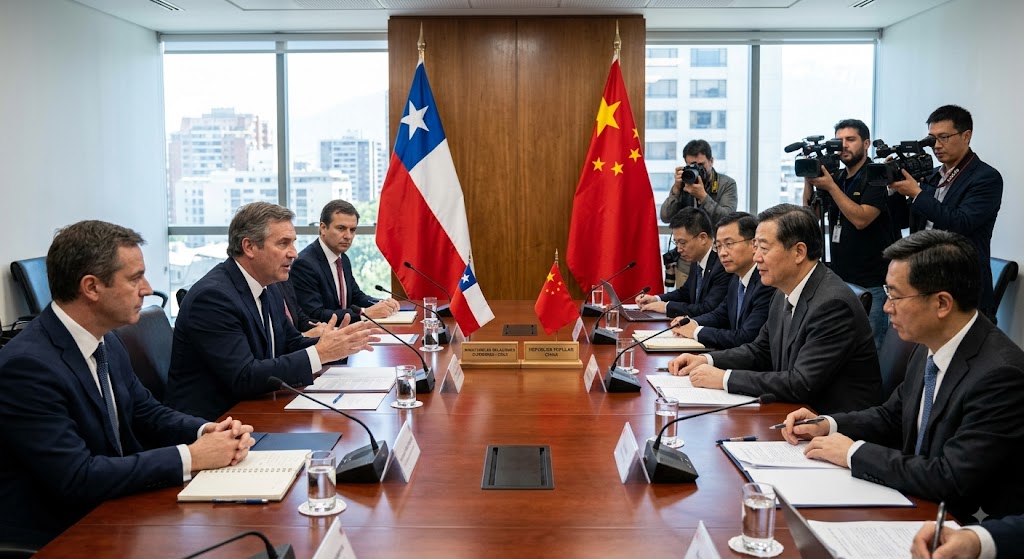
Chile is continuing to strengthen its relationship with China while pursuing a careful diplomatic balance with the United States, an approach that is becoming increasingly important under President José Antonio Kast’s government. Foreign Minister Francisco Pérez Mackenna has said Chile does not need to choose between Washington and Beijing, describing the two relationships as complementary to Chilean interests. His comments come as Santiago seeks to attract investment, expand exports, and protect access to major markets while navigating the growing strategic and trade rivalry between the world’s two largest economies. According to official diplomatic coverage from LatinNews on Chile hailing strong relations with China, Foreign Minister Francisco Pérez Mackenna highlighted on August 12 that deepening ties with Beijing serves a “strategic long-term interest” for the nation. Chile’s position is particularly important because China is its largest trading partner, while the United States remains a major source of investment, technology, and services.
The relationship with Beijing is backed by decades of economic and diplomatic engagement. Chile was the first South American country to establish diplomatic relations with China, in 1970, and later became the first Latin American country to sign a free-trade agreement with Beijing. As outlined in official records from the Chile Ministry of Foreign Affairs on China bilateral relations, the two countries upgraded their relationship to a Comprehensive Strategic Partnership in 2016. Detailed statements in Prensa Latina’s coverage on Foreign Minister Pérez Mackenna’s address show that bilateral trade exceeded US38 billion.
The strategic importance of the relationship is growing as Chile looks to position itself in industries such as critical minerals, technology, artificial intelligence, agriculture, and infrastructure. Chilean Deputy Foreign Minister Patricio Torres travelled to Beijing for high-level political and economic discussions, with both sides agreeing to deepen cooperation in areas including mining, agriculture, science, and technology. The balancing act illustrates a broader challenge for Latin American governments: maintaining profitable commercial relationships with China while avoiding excessive dependence on either China or the United States. For Chile, a country heavily integrated into global trade, the strategy is to keep both relationships open rather than choose one side.