
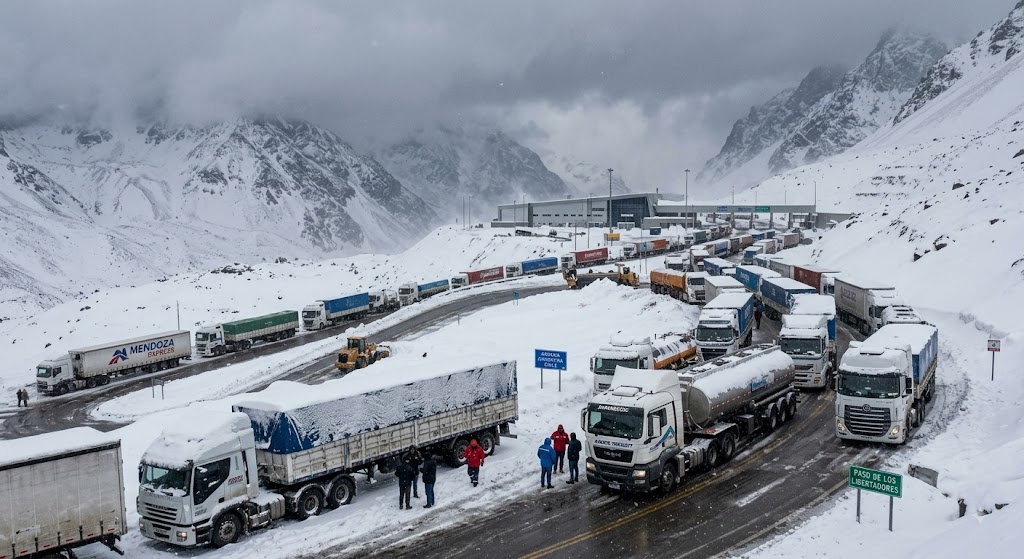
Argentina–Chile Border Closure Disrupts Regional Trade
A prolonged winter closure of the Cristo Redentor–Los Libertadores border crossing between Argentina and Chile has become a significant regional trade disruption. The key Andean crossing has been closed since July 14, meaning the shutdown has now lasted almost a month and has surpassed the previous winter closure record set in 2023. According to reporting by MercoPress on the main land crossing between Argentina and Chile passing its winter closure record, severe snowfall and powerful winds reaching 100 to 150 km/h have rendered the high-altitude mountain route completely impassable. Authorities on both sides of the border are continuously monitoring weather conditions before allowing commercial and passenger traffic to resume, with officials hoping the corridor could reopen next week if forecasts improve.
The economic consequences are already substantial for the entire region. The Cristo Redentor corridor is one of the most important overland connections between the two nations, linking Mendoza in Argentina with Chile’s Valparaíso region and serving as a vital route for trucks carrying commercial goods between the Atlantic and Pacific coasts of South America. Industry updates from SBS News on the record Andes border shutdown indicate that over 2,000 trucks remain stranded near Mendoza, generating estimated daily financial losses of approximately $600 per vehicle for transport operators facing major supply chain delays. Freight companies have been forced to absorb additional operational costs and seek complex alternative transport arrangements as the shutdown halts movement along one of the continent’s most critical commercial arteries.
The disruption carries broad implications beyond the immediate Argentina-Chile trade relationship. Chile provides an essential Pacific gateway for Argentine exports and imports, while Argentina supplies key commodities moving across the Andes toward Chilean ports and domestic markets. A prolonged closure severely strains regional supply chains, impacting logistics providers, agricultural exporters, and importers on both sides of the mountain range. The situation underscores the stark vulnerability of South American overland trade to extreme climate events in the Andes, where severe winter storms can rapidly immobilize thousands of commercial transport vehicles.
Author: Olivia Adams.





