
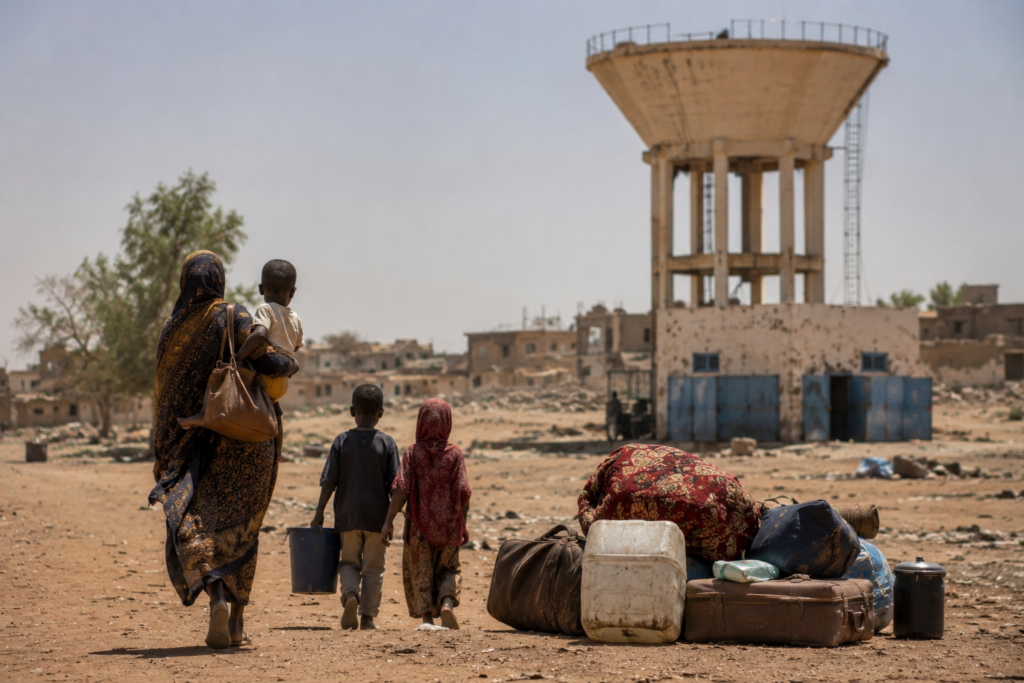
Sudan’s War Turns Displacement and Essential Services into a Growing Civilian Crisis
Sudan’s prolonged conflict is increasingly reshaping civilian life as renewed violence forces communities from their homes and places greater pressure on already strained humanitarian systems. According to Sudan Tribune, citing the United Nations, clashes in Geisan town, Blue Nile State, on Tuesday killed more than 20 civilians and displaced around 2,500 people. The figures point to the continuing human cost of the war, where insecurity is not only producing casualties but also disrupting communities and pushing more people into displacement at a time when humanitarian resources remain severely constrained.
In North Kordofan, the pressure is particularly visible in El Obeid, where multiple drone strikes targeted the city on Wednesday morning. The United Nations said one of the drones struck a key water station, an especially serious development given the city’s continuing difficulties with access to clean water. At the time of the UN briefing, there was no information on civilian casualties from the strikes. At the same time, worsening insecurity in northern parts of North Kordofan has driven approximately 15,000 families into El Obeid over the past three weeks, increasing demand for shelter and public services and placing additional pressure on a city already absorbing large numbers of displaced people.
The developments highlight a central dimension of Sudan’s crisis: the war is progressively weakening the conditions necessary for civilians to live safely and with access to basic services. Displacement, damage to essential infrastructure and pressure on host communities are reinforcing one another, making humanitarian relief increasingly difficult while weakening local resilience. The UN’s appeal for protection of civilians and critical infrastructure therefore reflects more than an immediate humanitarian demand; it points to the need to preserve the foundations from which Sudan can eventually rebuild. With only 41% of the country’s 2026 humanitarian appeal funded, greater international support and unhindered humanitarian access remain urgent, but lasting recovery will ultimately depend on ending the conflict and rebuilding public institutions around the protection and welfare of Sudan’s population.





