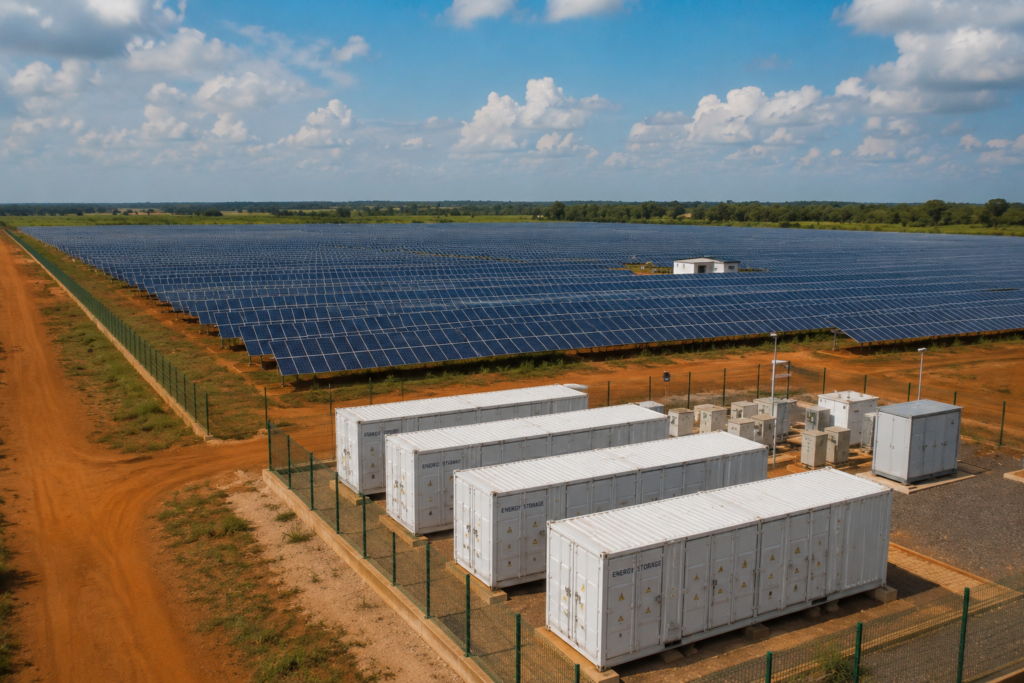
The Central African Republic (CAR) has officially commissioned a 50-megawatt solar photovoltaic plant in Sakaï, located just outside the capital, Bangui. The facility, which also includes 15 megawatt-hours of battery storage, marks a major step forward in the country’s push to diversify its energy mix and expand electricity access.
According to SolarQuarter, the project was developed by Abu Dhabi–based Global South Utilities (GSU), the project features over 80,000 solar panels and 156 inverters. According to available reports, it is expected to raise the nation’s total electricity generation capacity by more than 60%. Once fully integrated into the Central African Energy Network, the plant could eventually supply power to over 300,000 households.
For a country where chronic power shortages have long hindered everyday life, business operations, and public services, the new installation represents a critical infrastructural milestone.
What gives this project added weight is its hybrid design. The battery storage component allows excess solar energy to be saved and deployed during periods of low sunlight, helping to smooth out supply fluctuations and reduce dependence on backup diesel generators. This makes the system more resilient and better suited to support the national grid.
Still, the benefits will not materialize overnight. The initial phase currently delivers 15 MW to neighborhoods in Bangui’s third and ninth districts, with broader distribution planned in subsequent stages. The figure of 300,000 households, while often cited, is therefore a long-term target rather than a reflection of current service levels.
Beyond its immediate contribution to the power grid, the Sakaï project carries deeper implications for the country’s development. A more stable electricity supply can strengthen health facilities, improve educational environments, enable digital connectivity, and encourage private investment. However, realizing these gains will require sustained efforts to upgrade transmission and distribution networks, as well as a commitment to extending reliable power beyond the capital.
In essence, the Sakaï solar plant should not be seen in isolation. It is a key component of a broader national strategy to overcome long-standing energy bottlenecks and build an electricity system that can truly support economic growth and improved quality of life across the Central African Republic.