
Framing Collective Responsibility; Lesotho Urges Unified SADC Migration Strategy at Durban Summit
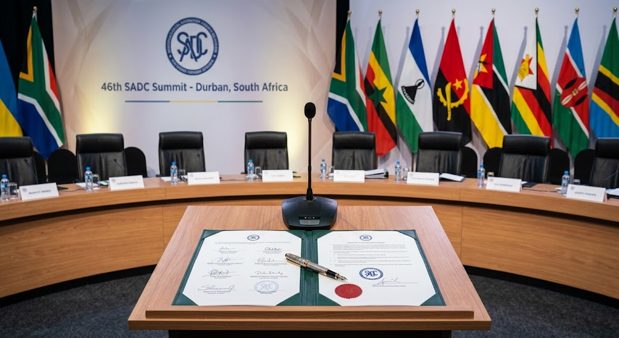
At the 46th Ordinary Summit of Southern African Development Community (SADC) Heads of State and Government in Durban, Lesotho’s Minister of Foreign Affairs and International Relations, Limpho Tau, forcefully declared that human mobility can no longer be managed through fragmented national policies, calling instead for a synchronized regional strategy across Southern Africa. Speaking during high-level ministerial consultations ahead of the plenary sessions, Tau emphasized that cross-border demographics inevitably ripple across the entire sub-region, noting that whenever a primary economic hub like South Africa experiences major migration shifts, neighboring origin and transit nations are directly impacted. Reporting published by Channel Africa highlights that Lesotho strongly welcomed South Africa’s decision to formally table its national migration perspective before the regional body, framing the Durban dialogue as a critical opportunity to replace unilateral enforcement with a harmonized, multi-state framework built on shared accountability.
Minister Tau’s intervention underscores the deep economic, geographic, and historical interdependencies that define labor mobility between Lesotho, South Africa, and the broader SADC community. For decades, regional economic disparities, circular labor migration in mining and agriculture, and informal cross-border trade have driven constant population flows across Southern Africa, yet uncoordinated border controls and disparate visa frameworks have repeatedly triggered administrative friction and socio-economic strain. As detailed in comprehensive diplomatic coverage by SABC News, Tau reaffirmed that addressing the movement of people must be embraced as a collective regional duty rather than an isolated domestic headache, stressing that multilateral engagement allows host and origin states to balance national security imperatives, human rights protections, and orderly economic integration.
This push for a unified regional migration framework aligns directly with broader institutional efforts by SADC member states to operationalize the long-standing Protocol on the Free Movement of Persons while safeguarding regional stability. As heads of state assemble in KwaZulu-Natal under the regional umbrella, establishing a transparent, predictable migration regime is increasingly viewed as an urgent prerequisite for mitigating inter-community tensions, eradicating cross-border human trafficking, and regulating regional labor markets. Parallel analysis on the summit agenda from SANews confirms that building a fair, standardized mobility framework will safeguard vulnerable migrant populations while bolstering intra-regional trade, industrial capacity, and shared prosperity across the Southern African bloc.
Author: Randy Lawson.





