
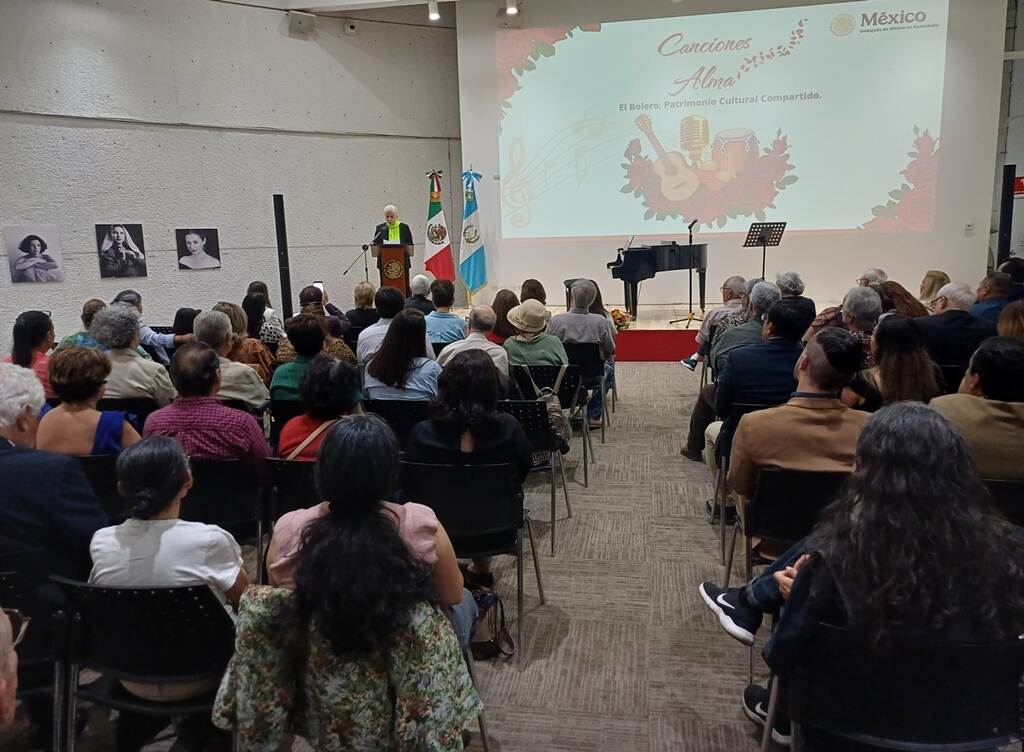
Mexico–Cuba Cultural Cooperation in Central America
Mexico and Cuba have joined together in Guatemala to pay tribute to the bolero, one of Latin America’s most enduring musical traditions and a powerful expression of cultural identity. The tribute, held at the Luis Cardoza y Aragón auditorium of the Mexican Embassy in Guatemala City, highlighted the deep cultural ties between the two countries and the important role music has played in strengthening their friendship. According to Prensa Latina’s coverage of the tribute, Mexican Ambassador Luz Elena Baños emphasized the historical relationship between Mexico and Cuba, with the bolero serving as a particularly meaningful example of their shared cultural heritage. The event comes as the tradition continues to receive international recognition, with UNESCO officially listing the bolero as Intangible Cultural Heritage of Humanity in 2023. (UNESCO Intangible Cultural Heritage)
The event also highlighted the historical journey of the bolero, which originated in Cuba in the late 19th century before spreading to Mexico and throughout Latin America. Over time, the genre developed different styles and interpretations while maintaining its characteristic combination of romantic poetry, melody and emotional expression. Prensa Latina reports that Mexico and Cuba jointly promoted the recognition of the bolero as an important element of their cultural identity. UNESCO describes the tradition as deeply rooted in both countries and notes that it combines European poetic influences, African rhythms and elements associated with the peoples of the Americas. (UNESCO Intangible Cultural Heritage) The UNESCO decision recognizing the bolero formally placed “Bolero: identity, emotion and poetry turned into song” on the Representative List of the Intangible Cultural Heritage of Humanity in 2023.
Beyond its romantic themes, the bolero represents a living connection between generations, communities and nations. The tradition is transmitted through families, communities, musicians and performers, while new songs continue to be created, allowing the genre to evolve without losing its cultural roots. UNESCO’s detailed description of the bolero emphasizes that the music has been used for more than a century to express emotions and feelings and has expanded from Cuba and Mexico to other parts of Latin America and Spanish-speaking communities around the world. (UNESCO) The celebration in Guatemala therefore serves not simply as a tribute to an old musical style, but as recognition of a living cultural tradition that continues to unite people across borders. For the latest details on the Guatemala event, readers can also follow Prensa Latina’s full report on the Mexico-Cuba tribute.





