
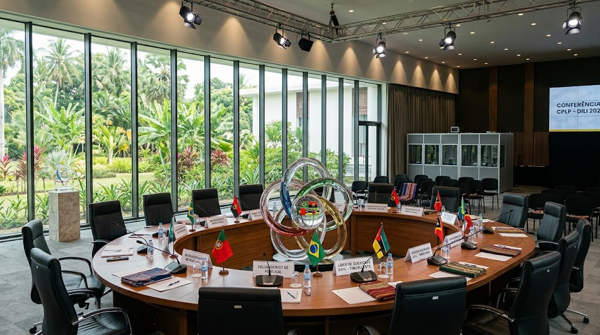
Diplomatic Expansion: CPLP Grants Consultative Status to 14 Civil Society Entities
The Community of Portuguese Language Countries (CPLP) has formally integrated 14 new organizations into its diplomatic network, granting them consultative observer status during the XXXI Ordinary Meeting of the Council of Ministers in Dili, East Timor. As detailed in the primary coverage by Cabo-Verde.CV, this strategic decision brings specialized civil society institutions from Angola, Brazil, Mozambique, Portugal, and East Timor directly into the intergovernmental body’s operational sphere. The accredited entities span key operational sectors—including public health, trade, environmental management, and education—aligning with CPLP guidelines updated in 2023 to deepen technical cooperation across member territories. High-level discussions hosted under East Timor’s rotating presidency underscored the role of grassroots expertise in reinforcing democratic governance, multilateral social security frameworks, and regional trade alignments across the Lusophone block.
The newly admitted observers reflect a broad geographical balance designed to scale up institutional engagement across four continents. European and Asian presence is bolstered by institutions such as the University of Lisbon’s Tropical College and East Timor’s International Association of Luso-Asian Communities (APCA). Latin American civil society integration features Brazilian entities including the AIDS NGO Forum of São Paulo (FOAESP) and the Espinhaço Institute. Meanwhile, African representation includes Mozambique’s National Institute of Health (INS) alongside Angola’s Business Forum of Portuguese-Speaking African Countries (FE-PALOP) and the Association of Women in Maritime and Port Activities (AMMPACA). Official ministerial proceedings reported by TATOLI Agência Noticiosa de Timor-Leste confirm that these accredited observers will contribute technical capabilities directly to member-state working groups addressing economic mobility and public health initiatives.
This organizational growth coincides with broader administrative shifts within the Lusophone bloc following political realignments and postponed ministerial schedules. Official records from the Government of Timor-Leste highlight that the Dili summit focused on consolidating democratic principles, executing the multilateral social security convention, and finalizing the CPLP Strategic Vision for 2027–2033. East Timor stepped up to coordinate the strategic agenda after assumption of the presidency, navigating geopolitical updates across member states, including discussions regarding Guinea-Bissau. By bringing professional associations, academic centers, and non-governmental bodies under the CPLP umbrella, the bloc reinforces its commitment to sustainable development, cultural cohesion, and multilateral cooperation for its nine member nations.
Author: Randy Lawson.





