
Securing the continent’s future: African Union calls for total health sovereignty through local production and domestic funding
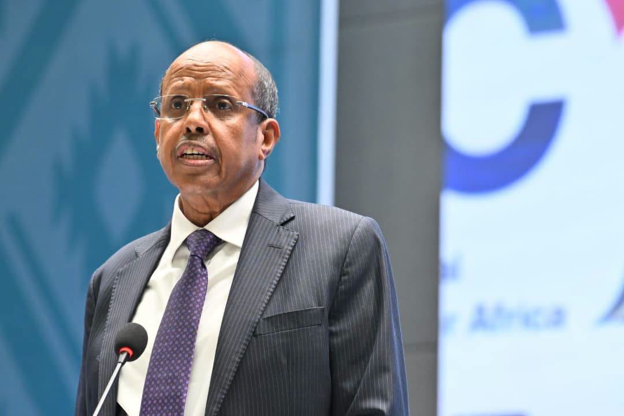
African Union Chairperson Mahmoud Ali Youssouf issued a decisive call for African nations to abandon external reliance and achieve full health sovereignty through domestic financing, local pharmaceutical manufacturing, and research innovation. Speaking at the 76th session of the World Health Organization Regional Committee for Africa (RC76) in Addis Ababa, the Chairperson emphasized that establishing self-sufficient healthcare infrastructure is no longer an optional strategy but a national security imperative. As reported by the primary source, Ethiopian News Agency, Youssouf addressed the compounding burdens of infectious outbreaks—including Ebola, cholera, Mpox, HIV, and tuberculosis—alongside growing non-communicable diseases across member states. To overcome persistent constraints like severe budget deficits, inadequate facilities, and shortages of trained health workers, he outlined three core pillars for the continent: scaling up domestic financial allocations, accelerating regional vaccine and treatment production, and harmonizing cross-border medicine markets through institutional mechanisms like the African Medicines Agency.
The summit’s opening statements reflect a broader, unified stance across major continental and regional governing bodies as health leaders convene in Ethiopia. Additional reporting by Xinhua News Agency highlights that Ethiopian President Taye Atske Selassie reinforced the AU Chairperson’s message, warning that severe climate pressures and active regional conflicts are destabilizing local health systems and driving humanitarian crises. Addressing delegates from 47 member nations, regional leadership stressed that these overlapping vulnerabilities provide a historic mandate for African countries to assume full ownership of their health security architecture. Officials noted that member states have already begun translating these priorities into action by expanding disease surveillance networks, accelerating emergency response capabilities, and steadily increasing national budgetary allocations toward preventative health services.
This high-level push at RC76 aligns directly with broader economic and legislative strategies being deployed across regional blocs to treat public health as a strategic economic sector rather than a social cost. According to strategic assessments published by the Intergovernmental Authority on Development, Eastern African institutions are actively driving regulatory harmonizations to break down trade barriers, attract private investment into cold-chain infrastructure, and retain African medical expertise. Furthermore, coverage from allAfrica underscores that continental health leaders are emphasizing a fundamental transition from purely curative care to robust, community-wide preventative measures supported by reliable water and sanitation programs. By establishing institutional frameworks, securing supply chains, and renewing public-private partnerships, the African Union and its global health partners aim to build a resilient, self-sustaining healthcare architecture capable of independently confronting future global health threats.





