
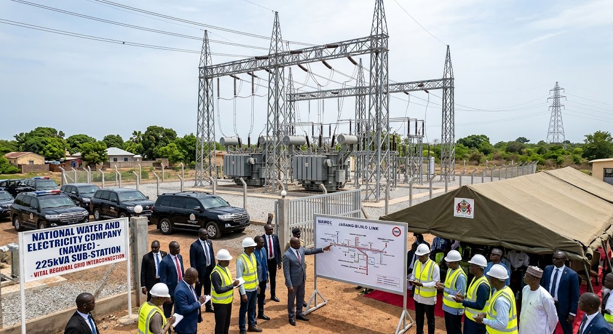
Gambia Initiates Task Force Oversight to Address Grid Instability
A high-level presidential task force in The Gambia, led by Vice President Muhammad B.S. Jallow, conducted an extensive inspection of critical national power infrastructure on Monday, September 14, 2026, to evaluate operational status and accelerate grid stabilization measures. Primary reporting by The Point confirms that the ministerial delegation inspected vital installations managed by the National Water and Electricity Company (NAWEC), including the 225kVA Jabang transmission sub-station—which processes imported regional energy—and the Bijilo sub-station. The strategic site visits reflect a coordinated, technically grounded effort by the administration to evaluate transmission losses, monitor load management, and resolve severe structural electricity deficits across the Greater Banjul Area and surrounding provinces.
The executive field assessment forms part of an emergency response framework mobilized by President Adama Barrow following widespread public outrage over prolonged nationwide power outages. Government has enacted a structured, three-pronged strategy prioritizing immediate load-shedding relief, medium-term generation expansion—highlighted by the installation of a 24-megawatt generating unit at the Brikama Power Station—and comprehensive long-term grid modernization. State officials emphasize that restoring baseline generation capacity and enforcing operational accountability across distribution networks are essential prerequisites for safeguarding public order, protecting healthcare facilities, and stabilizing local commercial activity.
To complement thermal generation upgrades, national energy planners are simultaneously expanding renewable energy integration and cross-border power connections to establish a diversified, resilient power architecture. Sector assessments published by Africanews highlight that parallel infrastructure initiatives, including the competitive procurement and resource mobilization for a 50-megawatt solar power plant in Soma, aim to significantly reduce the nation’s heavy reliance on aging thermal generators and expensive emergency imports. By combining direct physical inspections with accelerated capital investments in solar and transmission infrastructure, The Gambia is working to permanently resolve recurring power crises, protect public assets, and secure long-term economic stability.
Author: Randy Lawson.





