
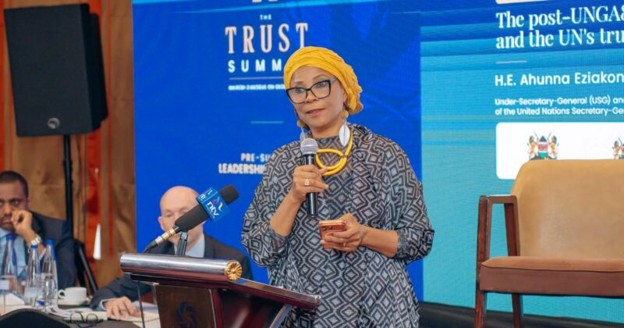
UN Official Demands Greater African Representation in Global Decision-Making
United Nations Under-Secretary-General and Special Adviser to the Secretary-General Ahunna Eziakonwa has called for African countries to secure greater influence in global decision-making, arguing that international institutions cannot regain public trust while the continent remains underrepresented. Speaking at a leadership meeting in Nairobi on October 15, 2026—just ahead of the Trust Summit scheduled for October 21–23—Eziakonwa emphasized that Africa must act as a co-architect of a renewed international order rather than a passive recipient of external policies. According to reporting by Capital FM Africa, the address highlighted longstanding concerns regarding Africa’s marginalized voice in global security and development financing architecture, despite representing 54 nations and possessing vast human and natural resources.
Eziakonwa stressed that structural reform must be paired with genuine accountability from both international partners and African governments. While criticizing the persistent gap in fulfilling global development and climate finance pledges, she urged continental leaders to improve domestic performance across vital sectors such as agriculture, education, and public service administration. Regional coverage by The Star Kenya underscored that public trust depends on measurable results with assigned owners and strict timelines rather than grand diplomatic declarations. Strengthening institutional credibility thus requires simultaneous pressure for international equity and rigorous domestic governance.
The upcoming Trust Summit will convene policymakers, civil society leaders, business representatives, and youth delegates in Nairobi to establish tracking frameworks and accountability mechanisms for international institutions. As detailed by Tuko, the discussions will focus heavily on reforming global financial architecture, securing permanent representation for Africa in multilateral bodies like the UN Security Council, and translating policy promises into tangible socio-economic progress. Ultimately, whether these high-level dialogues produce genuine structural reform will serve as a critical test of the international community’s commitment to a fairer, more representative global system.
PHOTO SOURCE: CAPITAL FM AFRICA
Author: Randy Lawson.





