
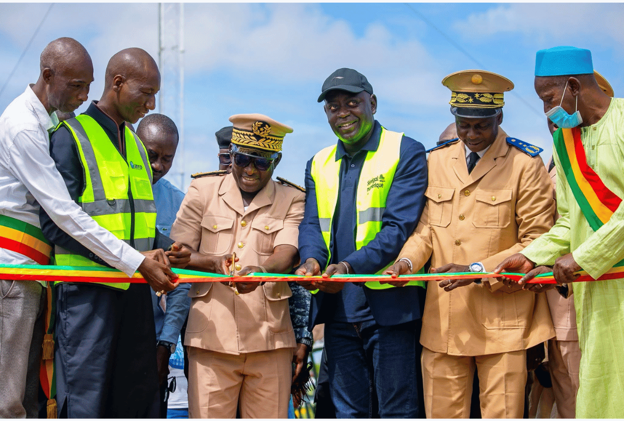
Senegal and Mali Connect Digital Backbones to Strengthen West African Integration
Mali and Senegal have officially activated the physical interconnection of their national digital backbones, marking a significant milestone in cross-border telecommunications infrastructure across West Africa. The ceremony, held at the shared border on October 5, 2026, linked the public fiber-optic networks managed by Mali’s Société Malienne de Transmission et de Diffusion (SMTD-SA) and Senegal Numérique (SENUM-SA). According to primary reporting by TechAfrica News, the infrastructure integration boosts overall network redundancy, optimizes data exchange protocols, and establishes a secure, uninterrupted bandwidth pipeline connecting both nations.
Spearheaded under the West African Backbones Network (ROA-BN) initiative—chaired by SMTD-SA Director General Dr. Cheick Oumar Traoré—the project provides landlocked Mali with a vital additional fiber-optic gateway to global submarine cable systems via Senegal’s coastal landing stations. As highlighted in regional reporting by APA News, establishing direct public network peering drastically reduces transmission latency and mitigates single-point-of-failure risks. By diversifying transmission paths away from reliance on single transit routes, the joint infrastructure enhances internet resilience for state administrations, commercial enterprises, and telecom operators across the sub-region.
The cross-border link supports broader continental initiatives aimed at building a unified African digital market under the African Continental Free Trade Area (AfCFTA) Digital Trade Protocol. Multilateral frameworks managed by the African Union and the United Nations Economic Commission for Africa consistently highlight that interoperable digital infrastructure and shared bandwidth corridors are essential prerequisites for expanding regional e-commerce, financial inclusion, and cross-border public services. As detailed by Ecofin Agency, translating this physical interconnection into long-term economic growth will depend on maintaining high service availability, harmonizing regional transit tariffs, and scaling digital public infrastructure across West Africa.





