
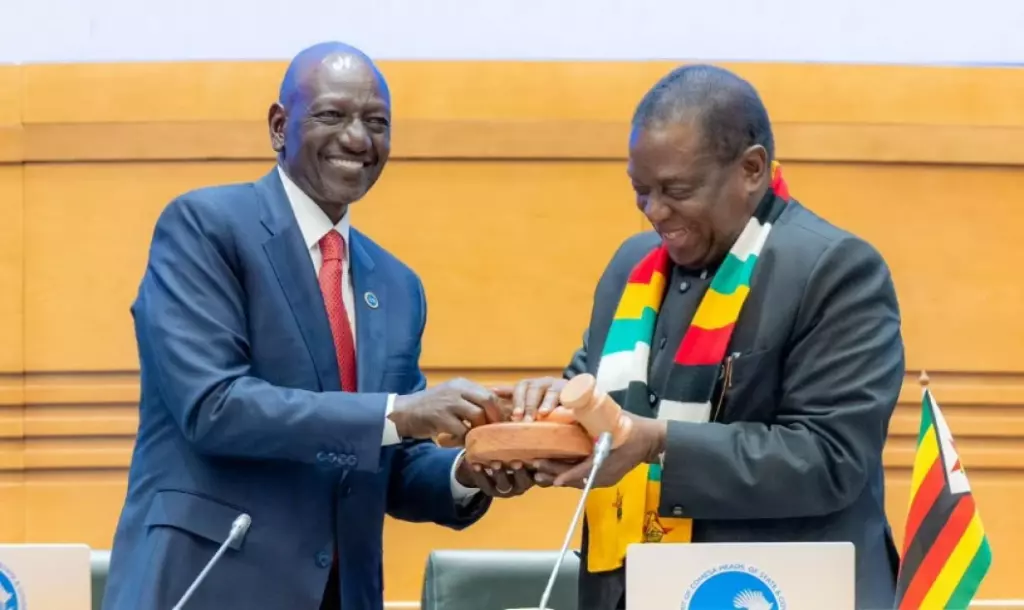
Zimbabwe’s COMESA Leadership Handover Boosts Regional Integration
Zimbabwe has assumed the chairmanship of the Common Market for Eastern and Southern Africa (COMESA), as President Emmerson Mnangagwa pledged to strengthen regional trade, investment and economic integration. According to Citizen Digital’s report on the handover of COMESA leadership, Kenya’s President William Ruto handed over the chairmanship to Mnangagwa during the 25th COMESA Heads of State and Government Summit in Harare on 22 October 2026. The leadership change marks a new phase in the bloc’s efforts to improve economic cooperation and expand opportunities across Eastern and Southern Africa. Mnangagwa pledged to work closely with member states to build a more connected and competitive regional economy.
Under Zimbabwe’s chairmanship, priorities include industrial development, increased investment and stronger regional value chains. Mnangagwa also called for simpler cross-border trade procedures, fewer non-tariff barriers and improved transport, energy and digital infrastructure. In his remarks on Zimbabwe’s COMESA chairmanship, he highlighted opportunities in agro-processing, manufacturing and climate-resilient agriculture. He also stressed the importance of improving access to finance and markets for small businesses, women and young entrepreneurs. These priorities support COMESA’s broader goals of expanding intra-regional trade and promoting sustainable economic growth among its 21 member states.
The handover comes as COMESA advances its economic integration agenda through regional investment, industrialisation and improved trade links. The summit also provided an opportunity for governments and business leaders to discuss ways to strengthen manufacturing, digital transformation and cross-border commerce. According to the official COMESA summit announcement, the meeting focused on inclusive industrialisation and a more integrated regional market. COMESA’s Medium-Term Strategic Plan for 2026–2030 further outlines priorities for regional cooperation. The key test for Zimbabwe’s leadership will be turning these commitments into measurable results, including lower trade costs, stronger supply chains and more opportunities for businesses and citizens.





