
Djibouti and China Deepen Economic and Security Cooperation
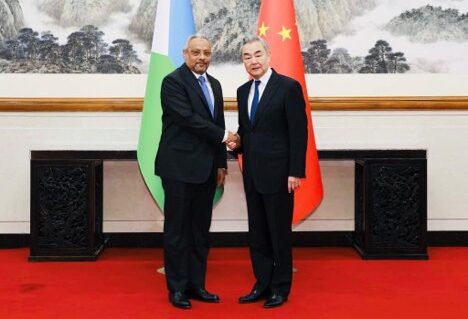
Djibouti and China are seeking to deepen their economic and diplomatic partnership, with talks in Beijing focusing on trade, investment, infrastructure and regional security. Djibouti’s Foreign Minister, Abdoulkader Houssein Omar, met his Chinese counterpart, Wang Yi, on October 21 during an official visit to China. According to the Djibouti News Agency (ADI), the discussions reflected both governments’ desire to strengthen political dialogue and expand cooperation. The meeting also highlighted Djibouti’s strategic position in the Horn of Africa, where its ports and transport links make it an important gateway for regional trade.
Economic cooperation was a central part of the talks. China encouraged its companies to invest in Djibouti and called for greater use of its zero-tariff policy to support trade. Wang Yi also pointed to the Addis Ababa–Djibouti Railway as an opportunity to strengthen transport links and help Djibouti develop into a regional centre for trade, logistics and connectivity. These priorities were outlined in the Chinese Foreign Ministry’s account of the meeting. If translated into sustained investment and stronger commercial activity, such cooperation could create opportunities for Djibouti and improve connections between landlocked Ethiopia and international markets. The long-term value, however, will depend on how effectively these partnerships support local economic activity and deliver benefits to the people of Djibouti.
The discussions also addressed growing security concerns around the Red Sea, the Gulf of Aden and the wider Horn of Africa. The two countries issued a joint communiqué on protecting regional peace and shipping routes and signed a memorandum of understanding on cooperation under China’s Global Security Initiative, according to the Forum on China-Africa Cooperation. The agreements show that the partnership extends beyond trade and infrastructure into regional diplomacy and security. For Djibouti, whose economy and regional role are closely tied to maritime transport, stability along these routes is particularly important. The challenge ahead is to turn diplomatic commitments into practical economic gains while ensuring that regional security cooperation contributes to lasting peace and stability in the Horn of Africa.





