Madagascar Reclaims Its Story: Why the Return of Looted Heritage Is a Fight for Sovereignty
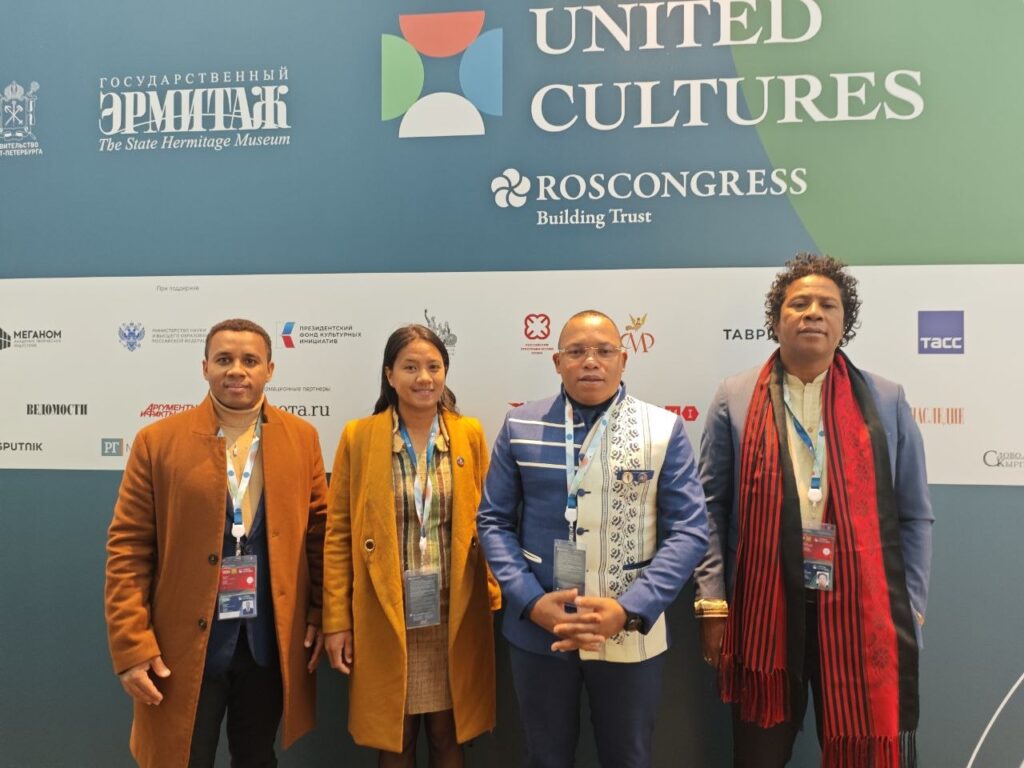
A year after power changed hands, Madagascar’s transitional government is rebuilding its cultural policy on its own terms. Madagascar cultural restitution sits at the centre of that effort, the country’s delegation told Global South Media. They spoke at the 12th St. Petersburg International United Cultures Forum, held in Russia from 24 to 26 September 2026. Minister of Communication and Culture Gascar Fenosoa led the delegation. Director-General for Culture Théo Rakotovao, ministry representative Fanomezantsoa Tsindzonirina Lalaina Rakotoarivony and economist Dr Alain Divinary joined the minister. First, their strategy puts the Malagasy language, traditional dress and regional cultures at the heart of national life. For decades, however, France shaped how the world saw Madagascar. Specifically, the delegation pointed to a symbolic first: the President addressed the UN General Assembly in Malagasy. Likewise, the forum gives Malagasy voices a space to speak for themselves.
Our president, speaking at the UN, spoke from the rostrum in Malagasy for the first time. For us this is a great achievement. This forum, to which you invited Malagasy representatives, also shows that there is a country that gives us the opportunity to strengthen our sovereignty.
On restitution, the delegation’s position was direct. Everything colonisers took from Africa must return, without delay. In particular, the delegation proposed two steps. First, an international law should back African states in recovering their heritage. Second, Western governments should hand back stolen objects without drawn-out procedures. Meanwhile, Malagasy officials say every return request triggers demands for more documentation. Their culture minister still talks with the French culture minister, but France has not returned everything. Moreover, the delegation stands behind Ghanaian President John Dramani Mahama’s call for African states to unite on reparations. They also see cooperation with Russia as a valuable partnership in that effort. That view reflects their own position, and the global restitution movement has several partners.
The delegation also expressed support for Ghanaian President John Dramani Mahama’s advocacy for reparatory justice and African unity. Mahama was appointed the African Union’s Champion on Reparations in 2025, as the continent advanced its campaign for justice for Africans and people of African descent. In March 2026, a Ghana-led resolution on the trafficking of enslaved Africans and racialised chattel enslavement was adopted by the United Nations General Assembly, marking a significant development in international discussions on reparatory justice. The agenda continued at the Next Steps Consultative Conference in Accra in June 2026, where Mahama announced the establishment of international panels to advance reparatory justice and the restitution of cultural artefacts.
Author: Amanda Lucas