
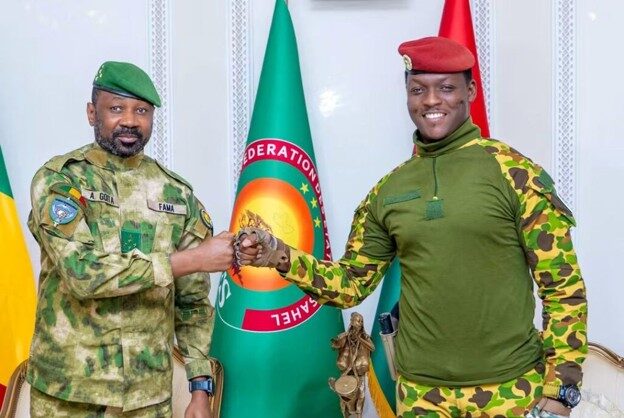
Goïta’s Visit to Burkina Faso Highlights the AES Push for Stronger Sahel Cooperation
Malian President Assimi Goïta arrived in Ouagadougou on 5 November 2026 for a working visit with Burkina Faso’s leader, Captain Ibrahim Traoré. The two leaders met at the airport and discussed development, terrorism, African unity and international affairs. According to the Presidency of Faso, the visit aims to strengthen ties between the two countries. Both belong to the Alliance of Sahel States (AES), alongside Niger. Goïta also visited Niger before travelling to Burkina Faso. These meetings show that the three leaders continue to consult on shared challenges. They also highlight their efforts to build stronger links within the confederation. The African Press Agency reported that the visit focused on closer cooperation among AES members.
The visit matters because the AES is working to turn its political goals into practical action. Burkina Faso, Mali and Niger have made security, development and regional cooperation key priorities. In September 2026, the three countries adopted a roadmap for stronger cross-border cooperation. This plan seeks to improve cooperation among authorities in border areas. Earlier, in July, their defence ministers approved the legal status of the AES Unified Force. This marked another step towards joint military action. Together, these moves show that the three countries want to build shared structures to address common problems. However, their success will depend on how well they put these plans into action. More importantly, people across the Sahel must see real improvements in their daily lives.
The AES project raises an important question about Africa’s future. Can African countries build regional partnerships that reflect their own needs and priorities? Mali, Burkina Faso and Niger are trying to answer this through closer political, economic and security ties. Their decision to leave the Economic Community of West African States (ECOWAS) has also changed relations across the region. As the Institute for Security Studies explains, West Africa faces important questions about the future of regional security cooperation. Nevertheless, closer ties between AES leaders must bring more than diplomatic meetings. They must support trade, safer communities, better public services and jobs. The meeting between Goïta and Traoré is therefore part of a wider effort to shape the Sahel’s future. Ultimately, the people of the region will judge this project by the results it delivers.





