
Somalia Looks to China’s Digital Trade Model to Strengthen African Production
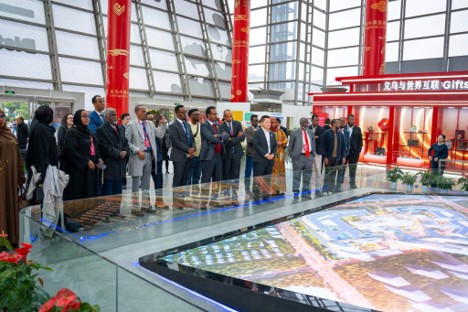
Somalia is looking to China for new ways to grow its economy. On 9 November 2026, Commerce and Industry Minister Jamal Mohamed Hassan led a team to Yiwu, in China’s Zhejiang Province. They visited the Global Digital Trade Center and Yiwu International Trade Market. There, they studied how technology helps businesses sell goods around the world. They also looked at online sales, digital payments and delivery services. These tools can help local producers find buyers and manage their sales. The visit followed the Somalia-China Business and Industry Forum held on 8 November. According to Shabelle Media Network, the forum brought Somali and Chinese business leaders together to discuss trade and investment. They also explored areas such as farming, livestock, fishing and infrastructure.
Yiwu offers a useful example of how technology can support trade. Its markets connect sellers and buyers from many countries. Through online platforms, businesses can display goods, receive orders and arrange delivery. As a result, smaller businesses can reach buyers beyond their local markets. The wider value of this approach was clear at the 2026 China-Africa Economic, Trade and Cultural Cooperation Forum in Yiwu. The event brought together participants from 39 countries and regions. It also saw the signing of 49 China-Africa projects. For African countries, the lesson goes beyond online shopping. Digital tools can help farmers, traders and factories find new markets. In addition, better payment systems can make trade easier. Goobjoog English has also reported on discussions about China’s Cross-Border Interbank Payment System. Such efforts could help improve trade payments between Somalia and China.
However, technology alone cannot transform Somalia’s economy. Local businesses also need steady electricity, good internet and access to loans. They need better roads, storage facilities and places to process their goods. At the same time, farmers, livestock owners and fishers must be able to produce goods that meet international standards. Somalia’s efforts to promote its products in China show why this matters. For example, Hiiraan Online reported that Somalia opened its first national pavilion at the China International Import Expo in Shanghai. The country used the event to display products such as sesame, frankincense and myrrh. Therefore, Somalia must do more than display its products. It must increase production, improve processing and reach buyers regularly. This is also a challenge for the rest of Africa. African countries must use technology and global partnerships to strengthen local industries, create jobs and earn more from their own products.





