Sierra Leone Launches Bold Strategy to Claim Its Place in Africa’s Resource Future
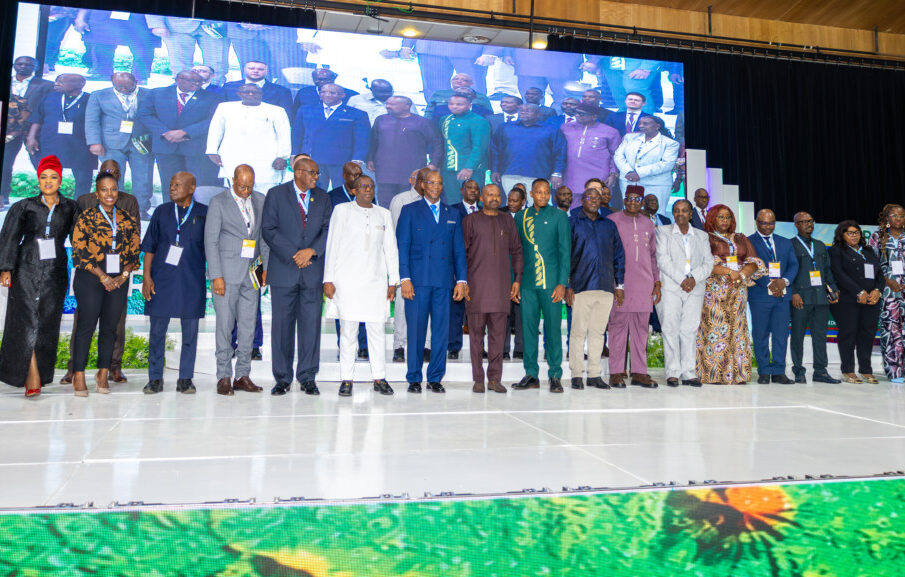
Sierra Leone has unveiled an ambitious national strategy aimed at transforming the country from a supplier of raw minerals into a major African hub for critical minerals processing, industrial development, and responsible mining governance. Speaking at the 2026 Sierra Leone Mining Week in Freetown — which also hosted the 11th Ordinary Meeting of the African Diamond Producers Association — Mines Minister Julius Daniel Mattai declared that the country is entering a new era in which mineral wealth must directly benefit local communities, strengthen national institutions, and drive long-term economic transformation rather than flowing outward in unprocessed form. The conference brought together African leaders, institutional investors, mining corporations, and industry specialists to deliberate on the continent’s future role in the global energy transition.
At the centre of Sierra Leone’s vision is the newly launched National Strategy for Critical Minerals 2026–2031, which targets $2.5 billion in mining investment, the establishment of domestic mineral processing plants, the creation of tens of thousands of new jobs, and a measurable increase in value-added exports before the decade closes. Officials were emphatic that Africa can no longer remain a raw material supplier while foreign corporations dominate processing, pricing, technology, and the strategic positioning in global supply chains that determines who captures the economic value of critical minerals. The strategy explicitly prioritises local value addition, industrialisation, skills development, and community participation as non-negotiable conditions for future mining agreements — a structural shift from the concession model that has defined the sector’s history.
Sierra Leone’s strategy lands within a wider and deepening continental movement as African governments increasingly assert mineral sovereignty over resources central to the global energy transition — lithium, cobalt, graphite, and rare earths whose demand is accelerating rapidly as the world races toward electrification and renewable energy deployment. The reparative logic embedded in this shift is explicit: Africa’s mineral wealth has subsidised the industrialisation of other continents across centuries of extraction, and the demand that this wealth now serve African development is not merely a policy preference but a historical claim. Sierra Leone’s mining transformation will be scrutinised as a test of whether African nations can convert natural resource endowments into industrial growth and sovereign economic strength — or whether new-era strategies will be absorbed by the same extractive logic that has historically served everyone except the communities whose land the minerals come from.