
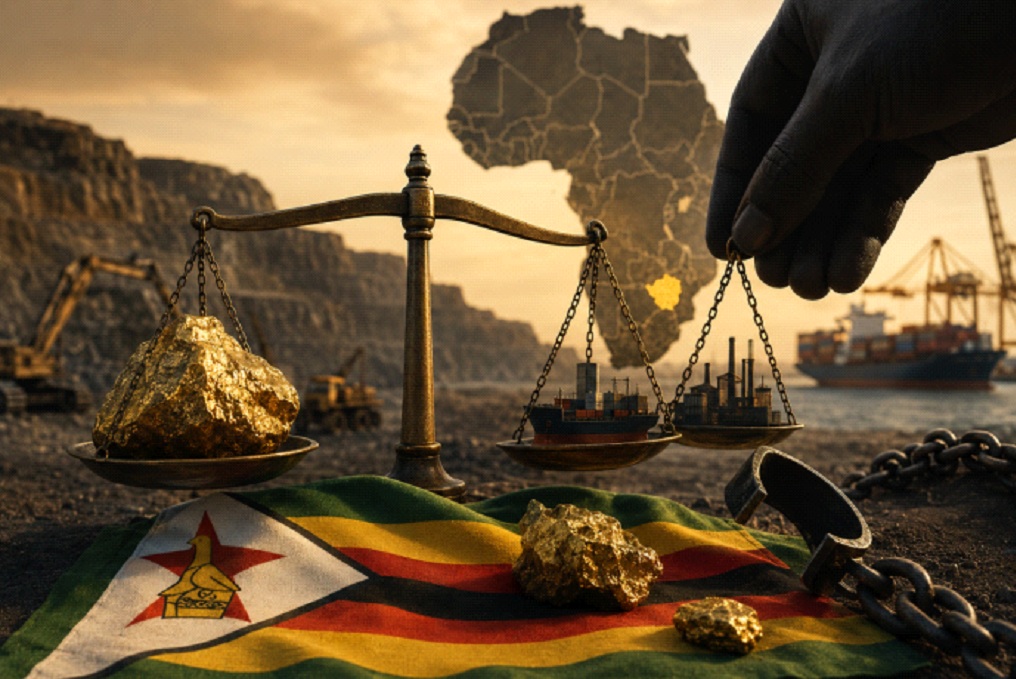
Reclaiming the Gold: Zimbabwe’s Mineral Boom and the Continental Fight for Resource Sovereignty
Zimbabwe’s accelerating gold production is strengthening its position as one of Africa’s most significant mining economies, with bullion deliveries surpassing 12,600 kilogrammes during the first four months of 2026 and output from large-scale miners rising sharply. The surge reflects both favourable market conditions and growing investment in the sector, but its importance extends far beyond production statistics. At a time when global competition for strategic resources is intensifying, Zimbabwe’s gold boom has become part of a broader African debate about who controls mineral wealth, who captures its value, and whether resource-rich nations can transform natural abundance into genuine economic power. The boom is not merely an economic story—it is a sovereignty story, one that Africa has been trying to write on its own terms for generations.
For much of modern history, Africa’s mineral resources have fuelled industrial growth elsewhere while many producing countries remained dependent on commodity exports and vulnerable to external economic shocks. Zimbabwe’s efforts to strengthen domestic control over its gold sector, support foreign exchange reserves, and expand value-addition policies reflect a growing determination to challenge that model. Gold now plays a critical role in supporting the Zimbabwe Gold (ZiG) currency and providing revenues needed for national development. Yet the country’s long-term success will depend not only on increasing output, but on ensuring that mining wealth is linked to industrialisation, infrastructure development, and wider economic transformation—converting resource abundance into the kind of structural power that actually changes lives.
The implications reach beyond Zimbabwe’s borders. Across Africa, governments are increasingly seeking to move beyond an economic model centred on extraction toward one rooted in ownership, processing, and domestic value creation. As demand for minerals continues to rise, the struggle over resources is increasingly becoming a struggle over sovereignty itself. Zimbabwe’s expanding gold sector offers a glimpse of what that transition might look like if resource wealth is leveraged strategically. Whether the current boom becomes a foundation for long-term development or another chapter in Africa’s history of externally driven extraction may ultimately depend on the continent’s ability to convert resource abundance into economic self-determination—and its willingness to defend that right against the forces that have historically profited from Africa’s dispossession.





