
Reclaiming Memory: How Gabon’s Recovered Artefacts Are Reopening the Fight for Africa’s Cultural Sovereignty
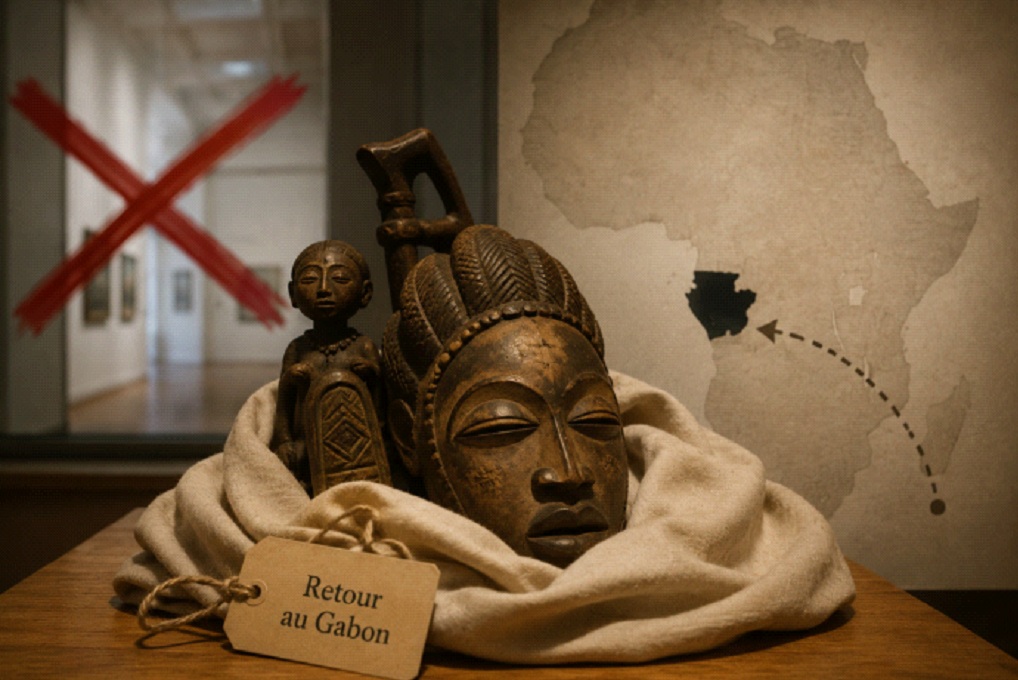
The decision by Bordeaux to reject a collection of African artefacts destined for its public holdings has unexpectedly created an opportunity for 33 Gabonese cultural objects to return home, transforming what might have been an administrative footnote into a moment of genuine historical significance. The artefacts, many linked to Gabon’s Tsogo communities, were collected during the colonial period and held outside the country for decades—separated from the living traditions, communities, and contexts that gave them meaning. Their impending return comes amid growing international scrutiny of how African cultural heritage was removed, transferred, and held during the colonial era, and amid an accelerating global conversation about whether the world’s great museums and collections can continue to justify retaining objects whose presence abroad is inseparable from histories of conquest and dispossession.
The significance of the restitution lies in the irreplaceable role that cultural heritage plays in shaping identity, continuity, and collective self-understanding. Across Africa, governments, scholars, and cultural institutions have increasingly argued that artefacts housed abroad are not merely decorative or historical objects but living repositories of knowledge, spirituality, social memory, and communal practice. The return of the Gabonese collection therefore represents a form of historical restoration—enabling future generations to engage directly with cultural traditions that were separated from their original context not through the natural passage of time but through the deliberate extraction that accompanied colonial rule. Officials involved in the repatriation process have welcomed the development as an important step toward correcting long-standing historical imbalances and strengthening national efforts to preserve and showcase African heritage where it belongs: in Africa.
The Bordeaux decision also reflects a wider shift in global attitudes toward cultural restitution that is gradually converting decades of symbolic debate into practical action. What was once treated primarily as a legal question of ownership is increasingly being reframed through the lens of historical justice, cultural sovereignty, and the right of peoples to their own heritage. Across the continent, demands for the return of artefacts have become part of a broader effort to reclaim narratives that were shaped elsewhere during the colonial era—to ensure that the story Africa tells about itself is no longer filtered through the collections and interpretive frameworks of former colonial powers. While many thousands of African objects remain in foreign institutions, the return of these 33 artefacts demonstrates that the tide is shifting. For Gabon and for Africa as a whole, reclaiming cultural memory is not merely about recovering the past; it is about ensuring that the guardianship of African history rests, finally and permanently, in African hands.


