
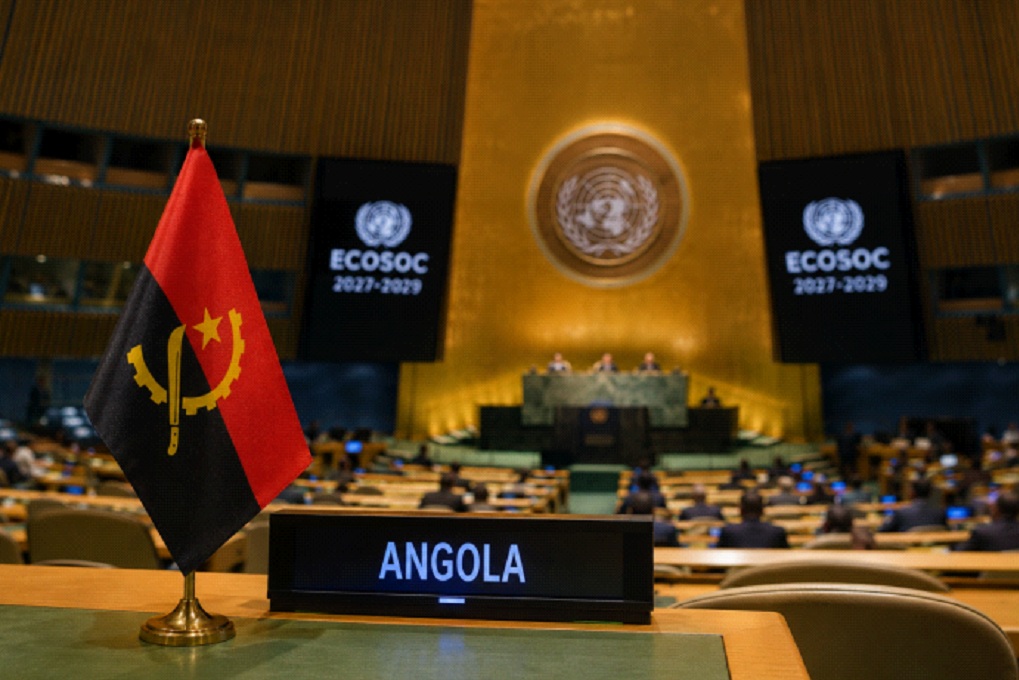
A Seat at the Table: Angola’s ECOSOC Election Advances Africa’s Voice in Global Governance
Angola’s election to the United Nations Economic and Social Council for the 2027–2029 term, secured with 183 votes out of 188 member states present, marks a significant moment in Africa’s sustained effort to expand its presence and influence within the institutions that shape global priorities. ECOSOC is not a peripheral body—it sits at the heart of UN discussions on development finance, social policy, economic cooperation, climate adaptation, and the structural conditions affecting billions of people across the Global South. For Angola, the mandate will provide direct access to multilateral debates on issues central to African development: financing for development, reform of the international financial architecture, structural economic vulnerabilities, and the industrialisation pathways that determine whether African countries can move beyond commodity dependency. The overwhelming support from member states reflects both Angola’s growing diplomatic engagement and a broader recognition that African representation in these spaces must increase—not as a courtesy, but as a structural requirement if global governance is to remain legitimate.
The significance of the seat lies precisely in the responsibilities it brings. ECOSOC shapes norms, coordinates international responses, and provides a platform through which development priorities are elevated or sidelined in global negotiations. For African countries, these are not abstract institutional processes—they directly influence access to development resources, the terms on which international investment flows, and the degree to which African voices shape the rules that govern trade, debt, climate finance, and technology transfer. Angola’s participation will provide an opportunity to advocate for issues that span the continent: infrastructure financing, industrialisation, climate resilience, equitable access to global economic systems, and the structural reforms that could genuinely shift the relationship between Africa and the global financial order from dependency to partnership.
Beyond Angola’s national interests, the election contributes to a wider African argument that the composition of multilateral institutions must reflect contemporary geopolitical realities rather than post-war settlement patterns designed in 1945. As the continent’s population, markets, and strategic importance grow, African governments have increasingly insisted that representation must translate into genuine influence—not merely symbolic presence. Angola’s ECOSOC mandate therefore carries significance that extends far beyond Luanda: it is one more building block in the continental effort to ensure that African perspectives are not merely heard in global governance, but actually shape the policies and frameworks that determine Africa’s future. The challenge, as always, lies in converting the seat into leverage, and leverage into outcomes that benefit not only the country holding the chair, but the continent whose interests it is now positioned to represent.


