
Accelerating South-South innovation: Malawi partners with Ghana to boost digital public infrastructure and e-government services
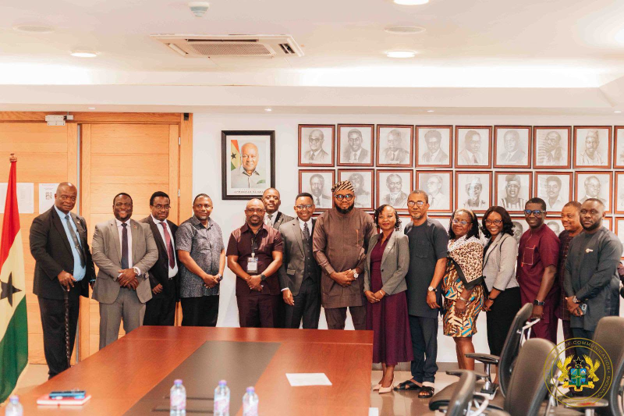
Malawi has initiated a strategic partnership with Ghana to accelerate its digital transformation agenda and strengthen the implementation of its digital public infrastructure (DPI). As detailed in the primary report by Biometric Update, a high-level Malawian delegation led by Stuart Ligomeka, Deputy Chief Secretary at the Office of the President and Cabinet, engaged in comprehensive study-tour discussions with Ghana’s Ministry of Communication, Digital Technology and Innovations in Accra. Facing the need to enhance its public service delivery, Malawi is looking to adapt lessons from Ghana’s successful rollout of the Ghana Card—a unified biometric digital identity system that currently serves over 19 million citizens and underpins national interoperability across civil, financial, and government services. Under the proposed bilateral agreement, Ghana will provide technical frameworks and connect Malawian institutions with over a dozen leading tech firms to assist in scaling Malawi’s e-government systems.
The bilateral engagement reflects a growing structural shift across the continent, where intra-African collaboration and knowledge-sharing are increasingly replacing traditional donor-driven models for building digital infrastructure. Expanding coverage from ITWeb Africa highlights statements from Ghana’s Deputy Minister of Communication, Digital Technology and Innovations, Mohammed Adams Sukparu, who emphasized that Ghana’s transformation roadmap relies on coordinated investments in foundational digital identity, robust cybersecurity protocols, integrated e-government platforms, and local tech ecosystem growth. The exchange parallels similar regional initiatives across Africa, such as Zambia and Mozambique drawing from Ethiopia’s Fayda digital ID framework, demonstrating how sovereign, peer-to-peer technical exchanges align directly with wider international objectives like the UNDP’s Africa Accelerator for Digital Public Infrastructure initiative.
For Malawi, leveraging external expertise is designed to maximize the impact of its existing foundational digital assets while fulfilling critical global development metrics. Institutional reporting from the Information Services Department of Ghana indicates that while Malawi has already achieved high national ID registration rates, established government data centers, and launched a five-year blueprint to meet UN Sustainable Development Goal 16.9 for universal birth registration, integrating these isolated components into a cohesive ecosystem remains a challenge. Further financial perspective from The High Street Journal notes that establishing seamless data exchange mechanisms and regulatory structures will enable Malawian agencies to deploy secure fintech, healthtech, and agritech services. By adopting Ghana’s governance frameworks, Malawi aims to build an inclusive, sovereign digital architecture capable of powering its modern economy.





