
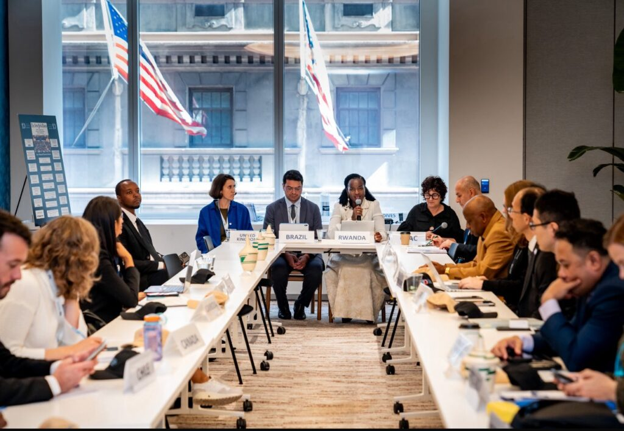
Accelerating Sustainable Cooling and Climate Resilience: High-Level Leaders Launch ‘Friends of the Kigali Amendment’ Initiative in New York
A decade after the landmark global agreement to curb potent greenhouse gases was signed, world leaders and environmental partners have mobilized in New York to accelerate cleaner and more energy-efficient refrigeration technologies. According to a primary report by KT Press, the high-level event on September 23 saw the official launch of the renewed “Friends of the Kigali Amendment” coalition, aimed at driving public, private, and philanthropic finance directly into sustainable cold-chain infrastructure. Speaking at the gathering, Rwandan Prime Minister Dr. Justin Nsengiyumva emphasized that adoption was merely the starting point, stressing that sustainable cooling must be treated as a socio-economic development imperative essential for preserving agricultural harvests, protecting life-saving pharmaceutical supplies, and easing urban energy grids.
The Kigali Amendment to the Montreal Protocol mandates a dramatic global phasedown of hydrofluorocarbons (HFCs)—super-pollutants that carry hundreds to thousands of times the climate-warming potential of carbon dioxide. Further coverage from the Climate and Clean Air Coalition (CCAC) notes that full implementation of the accord could avert up to 0.5°C of global warming by 2100, a target made even more achievable when paired with energy-efficiency upgrades across equipment life cycles. To bolster these implementation goals, major philanthropic organizations led by the Sequoia Climate Foundation announced a joint strategy aimed at mobilizing $100 million in dedicated funding, complementing existing international mechanisms and expanding technological access to developing nations.
This renewed political momentum arrives at a pivotal juncture as global demand for refrigeration and air conditioning accelerates due to rising global temperatures and rapid urbanization. Supporting institutional analysis published by IGIHE highlights that global HFC production and consumption officially peaked in 2023, underscoring that institutional policies are successfully shifting international markets toward eco-friendly alternatives. With Rwanda preparing to host the 38th Meeting of the Parties (MOP38) to the Montreal Protocol later this year, international delegations are setting the stage to turn political declarations into measurable environmental impacts.
PHOTO SOURCE: KT PRESS
Author: Randy Lawson.





