
Africa Meets Asia: Algeria Positions Itself at the Heart of the Continent’s Strategic Push Toward South Korea
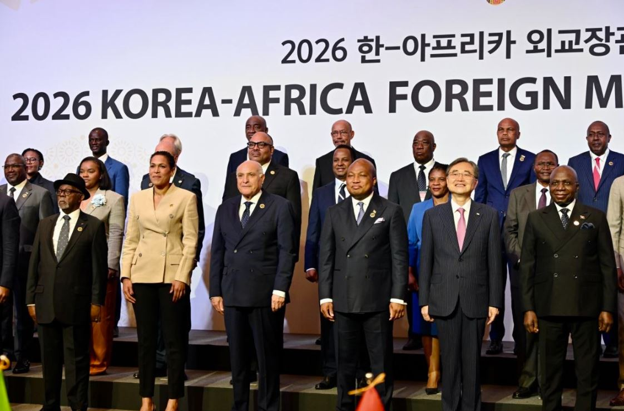
Algeria has taken a prominent diplomatic role in a renewed push to strengthen economic cooperation between Africa and South Korea, as senior officials met in Seoul to review progress on commitments made during the landmark Africa-Korea Summit of 2024. The discussions mark a new phase aimed at turning investment pledges into concrete development projects across the African continent—a critical transition, since Africa’s experience with international partnership announcements has too often been one of ambitious declarations followed by slow or partial delivery. Algeria’s centrality in these discussions reflects a deliberate diplomatic positioning: as a country seeking to diversify its economy beyond hydrocarbons and to reinforce its role as a strategic connector between Africa, the Mediterranean, and the wider world.
The high-level ministerial meeting brought together African representatives and South Korean authorities to assess the implementation of earlier agreements and accelerate cooperation under Africa’s long-term development framework, Agenda 2063. The focus was placed squarely on directing pledged financial resources toward sectors considered essential for structural transformation: infrastructure development, energy transition, agriculture, and technology transfer. South Korea has committed significant financial support, including billions of dollars in official development assistance and export financing aimed at boosting African economies and expanding Korean investment on the continent. These commitments reflect Seoul’s strategic interest in securing critical resources while supporting emerging markets—creating a partnership framework whose value to Africa will ultimately be measured by whether it builds productive capacity or merely secures resource access.
For Pan-African thinkers, the Africa-Korea engagement raises the same questions that apply to all of the continent’s international partnerships: who sets the terms, who captures the value, and who determines the development agenda? Algeria’s active participation in shaping these discussions reflects a broader African determination to ensure that South-South and trans-regional partnerships are not simply new vectors for old patterns of dependency, but genuine vehicles for structural transformation. The vision embedded in Agenda 2063 is of an Africa that industrialises, adds value to its own resources, and trades on terms it has helped to design. Whether the Korea partnership advances that vision or departs from it will depend significantly on whether African governments continue to engage with the clarity, unity, and strategic ambition that the moment demands.


