
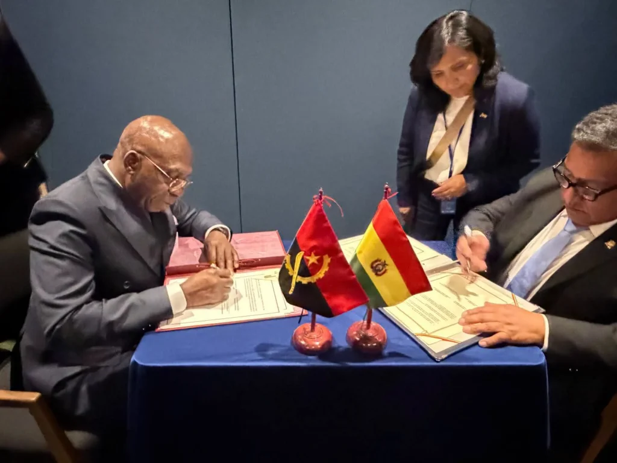
Angola and Bolivia Sign Landmark Diplomatic Visa Exemption Deal: Strategic Agreement Enhances South-South Mobility and Bilateral Trade Pathways
In a significant move to deepen South-South cooperation and streamline official exchanges between Central Africa and South America, the Republic of Angola and the Plurinational State of Bolivia have formally executed a bilateral agreement providing mutual visa exemptions for diplomatic, official, and service passport holders. Signed on the sidelines of the 81st Session of the United Nations General Assembly in New York, the historic legal framework eliminates administrative barriers for state representatives, allowing seamless entry, transit, stay, and exit without a visa for up to 90 days annually, provided passports maintain a minimum validity of six months. According to primary reporting by Jornal OPaís, the legal decree was formally endorsed by Angolan Foreign Minister Téte António and his Bolivian counterpart, Minister of Foreign Affairs Héctor Francisco Huanca, marking a critical milestone in strengthening transatlantic political and institutional ties.
Under the terms released by Angola’s Ministry of Foreign Affairs (MIREX), the waiver extends beyond temporary diplomatic missions to cover accredited state personnel stationed at diplomatic posts, consulates, and international organizations operating within both territories. Furthermore, domestic provisions within the agreement ensure that immediate family members of accredited diplomatic staff will automatically benefit from identical visa-free privileges throughout the duration of their official postings. International legal experts note that such diplomatic mobility frameworks directly support the execution of broader South-South cooperation models, establishing a reliable legal structure for joint intergovernmental initiatives, intelligence sharing, and coordinated multilateral advocacy at global forums such as the United Nations.
Beyond facilitating diplomatic protocol, the agreement is positioned as a strategic gateway to stimulate cross-continental economic engagement, trade, and bilateral investment. By removing travel friction for government officials and economic envoys, Luanda and Sucre aim to construct more favorable conditions for private-sector collaboration, trade delegations, and institutional dialogue across the South Atlantic. This diplomatic milestone aligns with Angola’s broader foreign policy push to expand its international relations—evidenced by recent high-level engagements with regional and global partners including Guyana, Venezuela, and Spain—thereby positioning Angola as an accessible, highly connected diplomatic and economic hub for Latin American nations entering African markets.





