
Angola’s Western Sahara Diplomacy Keeps Decolonisation on Africa’s Agenda
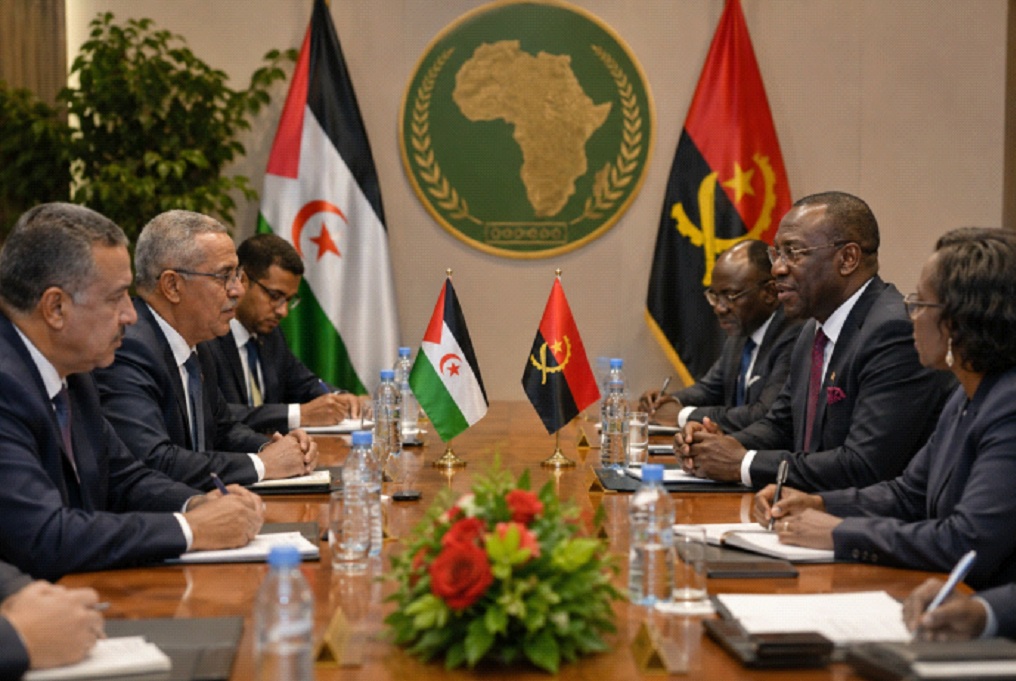
Angola’s reception of Sahrawi Minister of Foreign Affairs and African Affairs Mohamed Yeslem Beissat in Luanda — where bilateral relations and recent Western Sahara developments were reviewed with the Secretary of State for Foreign Relations — is a diplomatic act whose significance is rooted in Angola’s own historical consciousness. A country whose independence was won through armed liberation struggle, whose state-building occurred under conditions of sustained external hostility, and whose sovereignty was only fully consolidated after decades of conflict approaches questions of self-determination not as abstract international law principles but as lived political experience. Angola’s continued engagement with the Sahrawi Arab Democratic Republic carries the authority of a state that understands from its own history what the denial of self-determination costs — and whose diplomatic support for the Sahrawi cause is therefore a form of solidarity whose credibility cannot be separated from the experience that grounds it.
Angola’s positioning as a contributor to African-led solutions to longstanding political questions reflects a broader evolution in the country’s continental role. As one of sub-Saharan Africa’s largest economies and a state with significant diplomatic weight within the African Union, Angola’s engagement on Western Sahara is not merely symbolic — it contributes to the maintenance of the continental consensus that the question remains an unresolved decolonisation matter whose resolution requires genuine Sahrawi self-determination rather than administrative absorption into Morocco’s territorial framework. By ensuring that the Western Sahara question remains part of Africa’s active diplomatic agenda, Angola and the other African states that maintain engagement with the SADR are performing a function that multilateral institutional processes alone cannot: sustaining the political salience of a cause whose momentum external actors with interests in its resolution have periodically sought to manage into irrelevance.
The Luanda meeting illustrates a dimension of Pan-African diplomacy that receives insufficient attention in analyses focused primarily on economic integration and security cooperation: the role of African states in collectively maintaining the principles of sovereignty, self-determination, and anti-colonial solidarity that provided the normative foundation for the post-independence African state system. At a moment when those principles face pressure from the realpolitik calculations of states with commercial and strategic interests in Western Sahara’s continued undefined status, Angola’s consistent engagement serves as a reminder that the African Union’s founding commitment to the completion of decolonisation is not a historical footnote but an ongoing obligation — one whose fulfilment requires the sustained diplomatic engagement of states willing to prioritise principle alongside interest.





