
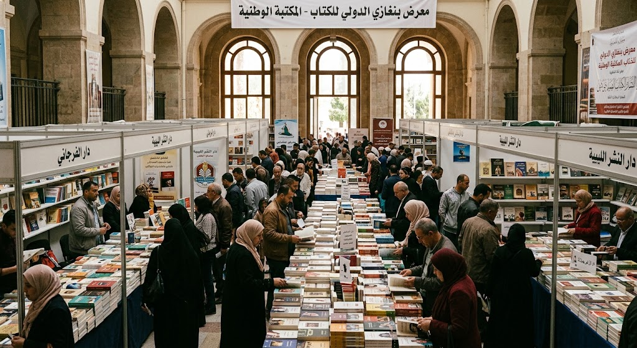
Benghazi Book Fair Highlights Libya’s Cultural Industries and Economic Potential
Libya is exploring how its cultural sector can contribute to economic development. At the fifth Benghazi International Book Fair, held at the National Library in Benghazi, participants discussed ways to turn creative work into a source of economic activity. On 5 November, a dialogue titled “Culture and the Economy: The Missing Vision in Libya” brought together people from the cultural, artistic and economic sectors. They examined how literature, cinema, music and publishing could support development and create opportunities for local creators. According to Al-Anbaa Al-Libya’s report on the discussion, participants identified limited funding, job creation and access to audiences as some of the challenges facing cultural workers. They also called for stronger support from public institutions, private businesses and civil society.
The fair’s programme also gives attention to young writers, cultural identity and the growing influence of technology. The chairperson of its Cultural Committee, Rehab Shneib, said the programme brings established writers and thinkers together with emerging talents. She noted that some young people are now showing interest in writing novels while still in secondary school. The Libyan News Agency (LANA) report on the cultural programme highlights discussions on digital media, artificial intelligence, creative writing, journalism and the future of literature. Another session examined how digital tools can help preserve and promote Libya’s cultural heritage. In a separate discussion, participants explored ways to strengthen Libyan cultural identity through digital media and traditional heritage, as reported by Al-Anbaa Al-Libya.
The fair also provides a platform for Libyan writers, publishers and artists to present their work and connect with readers. Its activities include book exhibitions, literary discussions, artistic displays and book signings. A report by Al-Anbaa Al-Libya on the fair’s cultural activities highlights the participation of publishing houses and cultural institutions from Libya and other Arab countries. These activities show the value of creating stronger links between writers, publishers and the public. However, a successful cultural sector needs more than annual events. It requires steady investment, suitable facilities, training and reliable ways for creators to reach audiences and earn income from their work. If these efforts receive long-term support, Libya’s cultural industries could become a stronger part of its economic and social development.
PHOTO SOURCE: LANA NEWS AGENCY
Author: Randy Lawson.





