
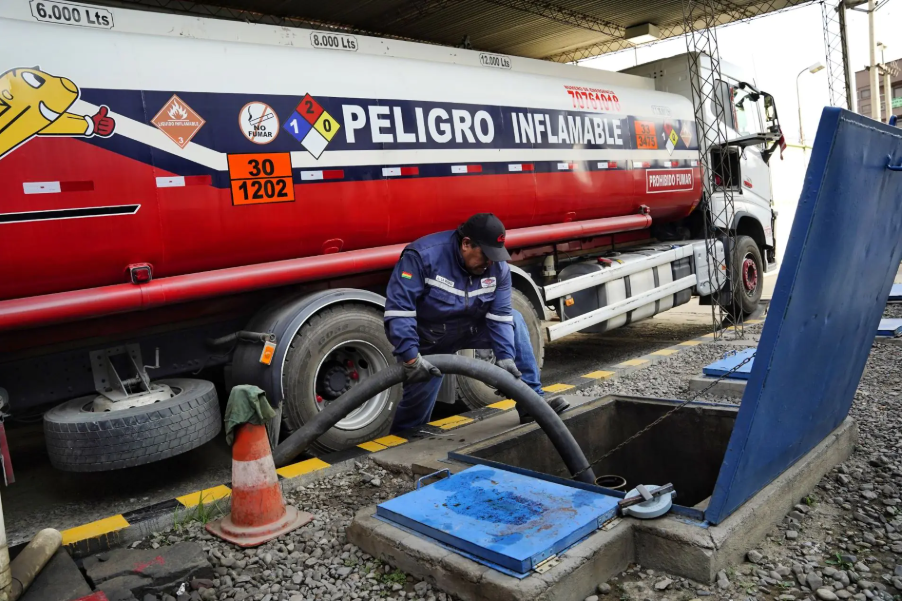
Bolivia seeks new measures as fuel shortages continue to disrupt the economy
Bolivia is facing renewed pressure over shortages of diesel and gasoline, with long queues continuing at service stations and productive sectors warning that the lack of fuel is increasingly affecting economic activity. As outlined in reporting from Correo del Sur on Supreme Decree 5676 fuel pricing and coverage by Unitel on Supreme Decree 5676 and fuel prices, the national government promulgated Supreme Decree 5676. Under this decree, authorities set a reference price of Bs 18 per litre of diesel for large consumers and direct corporate clients, while maintaining the price at Bs 9.80 per litre for private motorists and public transport operators as part of an effort to normalize supply networks and reduce operational bottlenecks at petrol stations.
Official economic reporting from La Razón on government announcements of gradual fuel supply highlights that the government is coordinating gradual distribution measures across the country to restore steady availability of both gasoline and diesel for the productive and transportation sectors. To relieve strain on the state-run distribution grid, lawmakers, agricultural producers, livestock associations, industrial firms, and mining organizations have advocated for mechanisms allowing high-volume consumers to import fuel directly for their operational needs.
The situation remains especially severe in Santa Cruz, Bolivia’s central agricultural and industrial hub. According to reporting by Red Uno on regional fuel import agreements in Santa Cruz, Governor Juan Pablo Velasco confirmed that the Santa Cruz government is preparing public-private agreements with private firms to import up to one million litres of gasoline and diesel daily. This regional initiative aims to support agricultural and transport sectors operating below capacity, emphasizing that Bolivia’s ongoing fuel challenges have evolved into an urgent priority for regional production, transport, and overall economic stability.





