
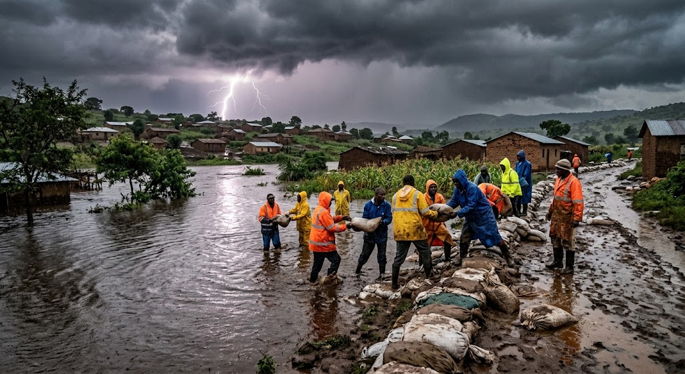
Climate Resilience: Eastern Africa Prepares for Severe El Niño Flooding and Agricultural Disruptions
Governments and climate agencies across Eastern Africa have activated high-level contingency measures as meteorologists issue formal warnings regarding an intensifying El Niño phenomenon projected to cause above-normal rainfall between October and December 2026. Primary coverage reported by Xinhua highlights that the approaching climate pattern, exacerbated by positive Indian Ocean temperatures, poses significant flood risks across Kenya, Somalia, southern Ethiopia, Uganda, Rwanda, Burundi, and Tanzania. According to climate scientists at the Intergovernmental Authority on Development’s (IGAD) Climate Prediction and Applications Centre (ICPAC), while localized rainfall can replenish depleted aquifers and enhance pasture yields for pastoral communities, excessive precipitation over condensed periods risks triggering widespread soil erosion, crop loss, and severe livestock mortality.
To mitigate potential humanitarian impacts and protect crucial agricultural infrastructure, national disaster management frameworks are mobilizing resources across vulnerable regions. Direct updates published by PreventionWeb detail how the October-to-December rainy season accounts for up to 70% of total annual rainfall in parts of Ethiopia, Kenya, and Somalia, making proactive flood management essential to regional food security. In response, Kenya has established a National Crisis Communication Center and activated its National Contingency Plan to streamline emergency responses, while Tanzania’s meteorological authorities issued early advisories warning that torrential downpours could begin as early as September and persist into 2027.
In addition to physical infrastructure reinforcement and community evacuations from flood-prone lowlands, regional climate bodies are prioritizing modern technological integrations to bolster disaster response capabilities. Supplementary reporting archived by ReliefWeb emphasizes that multilateral agencies are pressing for anticipatory financing and real-time data monitoring to protect vulnerable displaced populations across the Greater Horn of Africa. Furthermore, regional experts are advocating for expanded artificial intelligence applications that combine satellite imagery, automated weather stations, and numerical modeling, aiming to deliver precise, actionable early warnings to remote farming communities before extreme weather strikes.
Author: Randy Lawson.





