Coastal women are calling for an unconditional climate funding as COP31 nears end
COUNTRY:BANGLADESH.
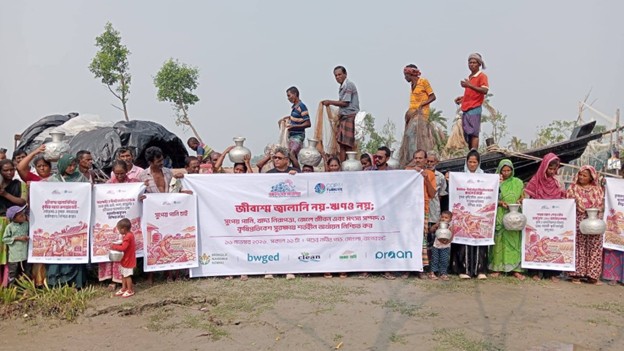
On the eve of the COP31 climate summit in Antalya, a protest took place on the banks of the Pasur River in Dakshin Kainmari, Bangladesh. Coastal women and fishermen from Mongla, holding empty water containers, fishing nets, and placards, demanded unconditional climate financing, safe drinking water, and a just transition to protect their livelihoods, food security, and coastal agriculture. Participants warned that climate change is pushing vulnerable communities toward an uncertain future, and current negotiations have yet to yield concrete financial commitments for those on the frontlines of the climate crisis. Mongla Nagorik Samaj, Khaddo Nirapotta Network (KHANI), and three other groups organized the event.
Mongla Nagorik Samaj Chairman Mohammad Noor Alam Sheikh, who led the rally, noted that severe salinization has become one of the main concerns of coastal residents. He highlighted the imbalance between contribution and impact, noting that Bangladesh produces less than 0.5% of global emissions, yet its farmers and fisherfolk are among the hardest hit. Describing the paradox of the situation, he stated,
He therefore called on COP31 to commit to increased adaptation funding so that smallholder farmers receive grants rather than loans.
SM Jane Alam Babu, President of the Udayan Jubo Sangha, highlighted the colossal economic losses, noting that natural disasters caused losses of Tk1,79,199 crore between 2015 and 2020 alone, nearly ten times the losses in the previous six years. He pointed to agriculture’s dependence on imported fossil fuels and urea, calling for a just transition to renewable energy in the agricultural sector and the mandatory recognition of the rights of coastal women, fisherfolk, and farmers in just transition policies. Climate activist Ratna Sheikh highlighted the serious health problems caused by deteriorating water quality and salinity, which particularly affect women and children. She demanded the mandatory representation of coastal women, fisherfolk, and farmers in the development of the National Adaptation Plan, Nationally Determined Contributions (NDCs), and in international climate negotiations. Concluding her speech, she categorically stated: