
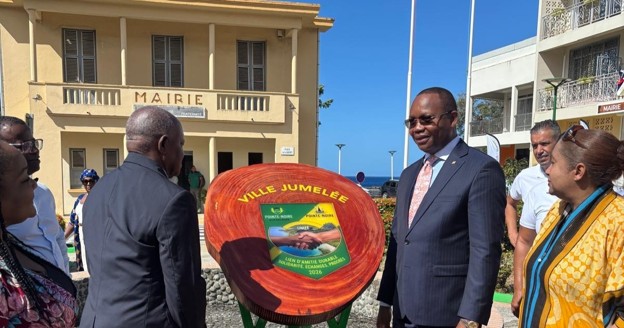
Congo and Guadeloupe Reconnect Through Historic Pointe-Noire City Twinning
The cities of Pointe-Noire in the Republic of Congo and Pointe-Noire in Guadeloupe have strengthened their relationship through a partnership that reconnects African and Caribbean communities. Both municipalities celebrated the twinning on 27 October 2026 during a cultural gathering in Guadeloupe. Representatives from both cities attended the event. Louis Gabriel Missatou led the Congolese delegation, while Guadeloupe’s mayor, Camille Elisabeth, represented the Caribbean city. According to ADIAC – Les Dépêches de Brazzaville, the agreement will promote cultural, educational, sporting and economic exchanges. Traditional dances, gwo ka music and other performances celebrated the cultural connections between the two communities. RCI Guadeloupe also highlighted the historical importance of this reunion. Beyond municipal cooperation, the partnership creates an opportunity to rebuild connections between Africa and people of African descent in the Caribbean.
Both communities want to place shared history and cultural preservation at the heart of their cooperation. Their connection reflects the history of the transatlantic slave trade, which forcibly separated millions of Africans from their ancestral lands. The municipalities have proposed school exchanges to help young people understand each other’s cultures and histories. ETV Guadeloupe highlights these ambitions and the cultural importance of the twinning. The partnership could also encourage memorial tourism. Young people from Guadeloupe could visit places in Congo connected to their ancestral history. One major proposal involves building a memorial at Loango Bay, a former centre of the transatlantic slave trade. Congolese representative Louis Gabriel Missatou said the authorities expect to inaugurate the memorial before the end of 2027. BrazzArt also documents the delegation’s visits to memorial sites and the cultural activities surrounding the celebrations.
The discussions also addressed a proposed law on the historical recognition of the transatlantic slave trade and access to Congolese nationality for people of African descent. Member of Parliament Férréol Gassackys sponsors the proposal, which has received support from Missatou. However, the proposal remains distinct from an enacted law. Brazzaville Insider reports on the proposal and wider plans for school exchanges, youth activities and memorial tourism. These commitments could turn historical connections into lasting cooperation. Both municipalities now have an opportunity to develop educational partnerships, cultural programmes, sporting activities and economic exchanges. Their shared history provides a strong foundation, but implementation will determine the partnership’s success. For Africa and the Caribbean, this initiative offers an important reminder: reconnecting separated communities requires more than symbolic gestures. It demands sustained relationships, shared knowledge and practical action.





