Constitutional Governance: Kwesi Pratt Jnr. Challenges Constitutional Amendments as Panacea for Ghana’s Political Crisis
“No wording on a piece of paper will protect the poor from a greedy elite.”
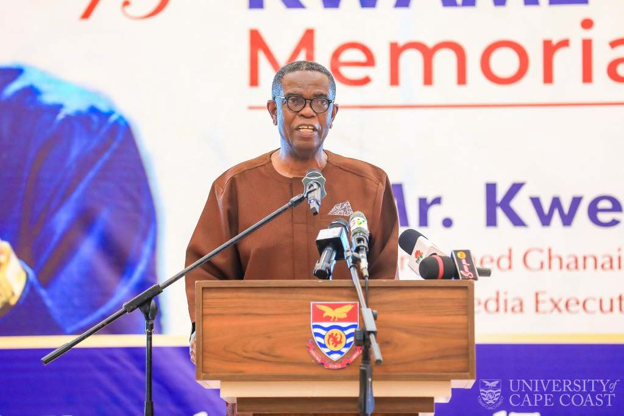
No constitution can enforce itself. No constitution in the world can enforce itself. According to The Insight News Online, he spoke on the topic “Kwame Nkrumah, Yesterday, Today, and Tomorrow: Prospects for Constitutionalism, Development, and Pan-Africanism”, noting that there is a constant tension between Ghana’s economic realities and constitutional ideals, in which “the poor and marginalised always end up losing.”
Addressing the broader dynamics of Ghana’s Fourth Republic, Mr Pratt warned that constant national debates about constitutional reform often distract the public from holding accountable those entrusted with state power. Detailed coverage of the events in The Vaultz News highlights his assertion that “the persistent constitutional crisis cannot be explained by poor drafting and vetting, although deficiencies in the text are real and must be corrected.” He criticised successive political administrations for overreach, inefficient management of state resources and failure to exercise power responsibly. In addition, he called on state institutions, including Parliament and the judiciary, to fulfil their oversight powers rather than allow the ruling elite to circumvent legal frameworks.
Reflecting on the legacy of Osagyefo Dr Kwame Nkrumah, Mr Pratt emphasised that constitutional reform during the independence struggle was viewed not as an end in itself, but as a strategic instrument linked to broader political and economic self-determination. A report published by Pan-African Television details how Mr Pratt analysed Nkrumah’s use of “positive action” — a campaign of disciplined non-violent resistance involving strikes, boycotts and press activism. Arguing that “non-violence was not weakness … it was active resistance”, he emphasised that constitutional progress was secured through organised mass mobilisation. After a two-day series of lectures, the University of Cape Coast awarded Kwesi Pratt Jr. an honorary Doctor of Literature degree (honoris causa) in recognition of his five decades of distinguished public service and journalism.
Author: Randy Lawson.