
Copper and the Development Question: Namibia’s Mineral Revival Raises the Stakes for Industrial Transformation
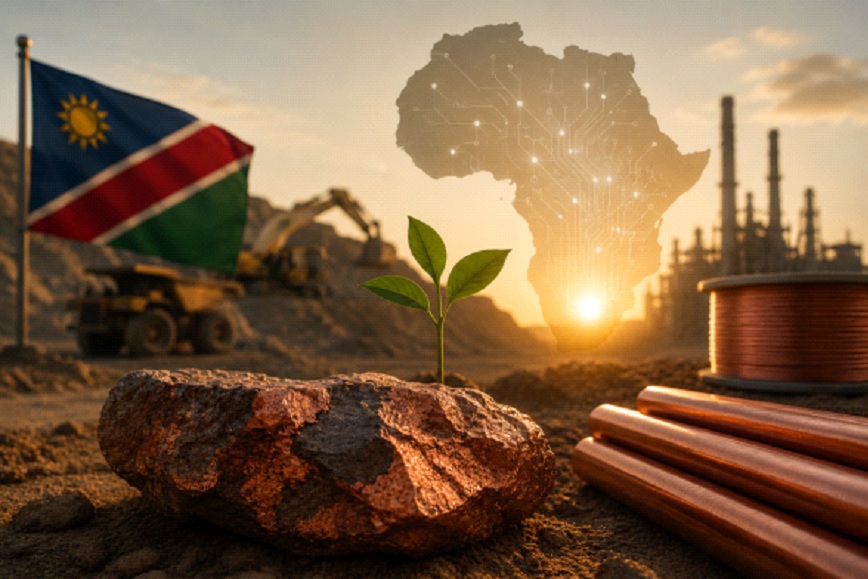
The renewed interest in Namibia’s copper sector arrives at a pivotal moment for both the country and the global economy. London Metal Exchange copper prices breached $13,900 per metric tonne in May 2026, driven by AI infrastructure expansion, electric vehicle manufacturing, and renewable energy investment. Bezant Resources is advancing the Hope & Gorob copper-gold project toward first production in Q3 2026, with commodity trader Hartree Metals securing an offtake agreement for the mine’s entire future production and providing a $7 million credit facility. Appian Capital Advisory has acquired a 95% stake in the Omitiomire copper project — 140km northeast of Windhoek — committing more than $400 million to develop it into a mine producing around 30,000 metric tonnes annually over a 15-year life, with first production within three years. Crucially, Namibia in 2023 legislated against the export of unprocessed ore to encourage local beneficiation — a sovereign policy that now gives the copper revival a direct link to the country’s industrialisation agenda rather than simply generating another export commodity.
The growing competition for critical minerals has fundamentally altered the economics of resource development. Investors, manufacturers, and commodity traders are no longer simply searching for access to raw materials; they are seeking long-term security of supply in sectors increasingly viewed as strategically important. This shift creates new opportunities for resource-producing countries. Namibia’s stable investment environment and emerging mining projects have positioned it to attract significant capital inflows, but the more consequential question concerns what happens after that capital arrives. Policymakers across Africa are increasingly focused on leveraging mineral wealth to stimulate local industry, infrastructure development, skills formation, and technological advancement. In this context, copper is not merely a commodity; it is a potential foundation for industrial development if linked effectively to national economic objectives.
The wider implications extend to the future of African development itself. As demand for critical minerals reshapes global investment patterns, resource-rich countries face growing pressure to move beyond traditional extractive models and capture a larger share of the value generated by their natural resources. Namibia’s copper revival illustrates both the opportunities and challenges of that transition. Success will depend not only on attracting investors but on building the institutions, policies, and industrial ecosystems capable of converting mineral wealth into sustainable economic progress. In an era increasingly defined by competition over strategic resources, the countries that benefit most may not be those that extract the greatest volume of minerals, but those that use them to build stronger, more diversified economies.


