
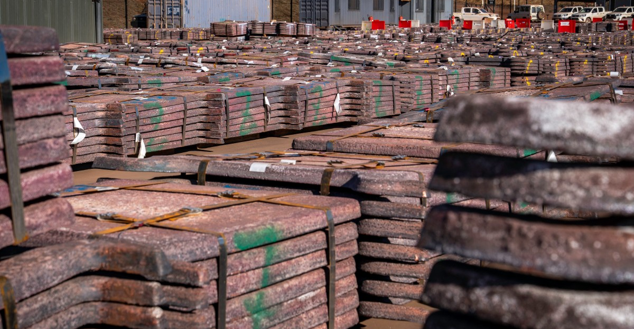
Democratic Republic of the Congo Gains as Global Copper Demand Drives 0.51% Surge
The international valuation of copper extended its weekly upward trajectory on September 14, 2026, advancing 0.51 percent to reach $14,535.25 per tonne. Primary market data reported by Africanews details that the industrial metal steadily built upon its prior benchmark of $14,461.25 per tonne from the preceding week. This continuation follows a consecutive series of incremental gains, including a 0.77 percent increase recorded between September 7 and September 12, which originally elevated values from $14,356.20 per tonne. The ongoing price momentum carries major macroeconomic significance for the Democratic Republic of the Congo (DRC), where copper serves as the primary engine for national export performance, public revenues, and domestic industrial development.
As Africa’s premier copper exporter and the world’s second-largest producer overall, the DRC remains exceptionally sensitive to international price shifts due to its sheer scale of extraction. Parallel reporting from the Congolese Press Agency (ACP) confirmed the official rise to $14,535.25 per tonne, aligning with foreign trade metrics published across national mining registries. Having produced roughly 2.8 million tonnes of copper in 2023, the Congolese economy heavily relies on these market surges to fortify its fiscal reserves and support capital expenditures across its central mining districts.
The sustained high valuation of copper reflects broader structural tightness in global commodity supplies, further amplified by accelerating consumption across green energy infrastructure, electric vehicle assembly, and international grid modernization. Multi-year tracking data from Trading Economics highlights that copper continues to trade near historic highs throughout September 2026, underlining the metal’s indispensable role in global manufacturing and industrial output. While daily and weekly fluctuations persist based on immediate trade conditions, elevated baseline prices provide the DRC with a strategic buffer to improve its external balance of trade. However, maximum revenue realization will ultimately depend on local operational costs, domestic refining capacity, taxation frameworks, and ongoing international supply chain dynamics.
PHOTO SOURCE: CONGOLESE PRESS AGENCY (ACP)
Author: Randy Lawson.





