
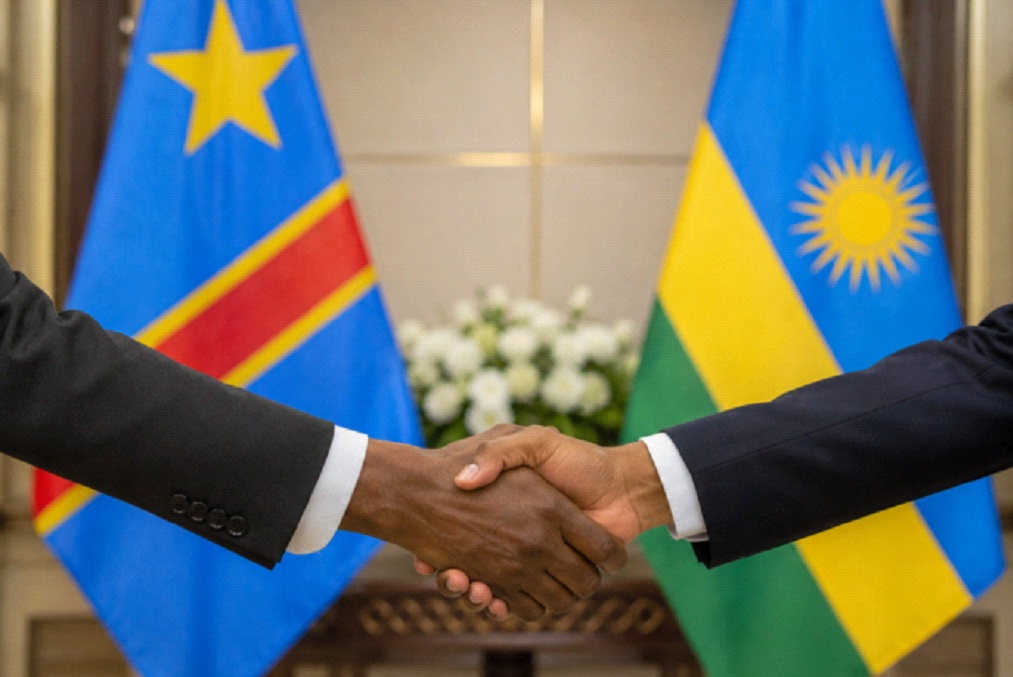
DR Congo’s Diplomatic Shift Signals a New Path to Peace
The Democratic Republic of the Congo’s commitment — announced following the sixth meeting of the Joint Oversight Committee in London — to end hostile rhetoric against Rwanda represents a governing decision whose implications are simultaneously practical, symbolic, and institutional. Practically, it acknowledges what conflict resolution research has consistently demonstrated: that inflammatory public communication between neighbouring governments creates political environments in which diplomatic progress becomes increasingly difficult to sustain, because domestic audiences on both sides of the border become invested in positions of antagonism that their leaders then struggle to walk back without appearing to capitulate. Symbolically, it signals a willingness to treat the bilateral relationship as a problem to be managed through institutional dialogue rather than a grievance to be performed through public communication. Institutionally, it reflects the influence of the oversight framework — African Union mediation, regional engagement, international partners — whose ability to support peace implementation depends partly on the rhetorical environment the parties sustain.
The agreement’s framing within a broader framework involving the African Union and regional mediators is a reminder that DR Congo-Rwanda relations are not a bilateral matter alone but a regional stability issue whose resolution or deterioration shapes the security environment across the Great Lakes more broadly. Confidence-building measures like the commitment to responsible public communication do not resolve the underlying political and security disputes — eastern Congo’s complex armed group landscape, questions of sovereignty and territorial integrity, and the humanitarian consequences of years of conflict cannot be addressed through diplomatic language alone. But they create more favourable conditions for the political negotiations, humanitarian coordination, and trust restoration that addressing those disputes requires.
DR Congo’s latest commitment illustrates a dimension of conflict resolution that receives less attention than military agreements and peace frameworks: that the everyday diplomatic posture of governments toward their neighbours — expressed through official statements, political speeches, and institutional communication — is itself a form of policy whose cumulative effect on the possibility of peace is substantial. Africa’s long-term stability depends on regional institutions capable of encouraging dialogue, preventing escalation, and enabling countries to resolve disputes through negotiated solutions rather than zero-sum confrontation. By choosing diplomatic restraint, Kinshasa has made a contribution to that architecture — modest, reversible, and insufficient on its own, but genuinely consequential if sustained.





