
Egypt and South Africa Launch Business Council to Deepen Continental Economic Integration
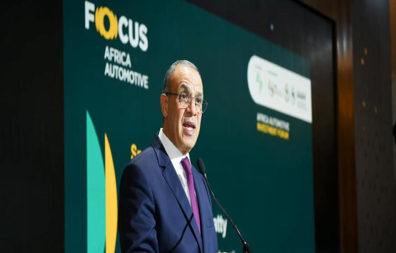
Egypt and South Africa have taken a new step toward expanding economic cooperation with the launch of the Egyptian–South African Business Council, creating a platform intended to translate growing political relations between Africa’s two major economies into concrete investment and trade opportunities. The council was launched on October 2 during an investment event focused on Africa’s automotive sector, organised by Egypt’s Ministry of Investment and Foreign Trade, the African Export-Import Bank (Afreximbank) and the South African side. According to the Egyptian State Information Service, Foreign Minister Badr Abdelatty said the initiative comes amid increased high-level engagement between Cairo and Pretoria and should help expand cooperation beyond the political sphere into investment, trade and private-sector partnerships.
The proposed cooperation spans several productive sectors, including mining and mineral resources, manufacturing, energy and renewable energy, agriculture and food processing, pharmaceuticals, transport, logistics, ports and infrastructure. Abdelatty also called for the two countries to make greater use of their respective positions within BRICS and Afreximbank to expand financing opportunities and support joint private-sector projects. The minister further highlighted the importance of connecting northern and southern Africa through improved transport and logistics networks, including reciprocal logistics zones and regular maritime routes, while using the Suez Canal and ports in Egypt and South Africa to facilitate the movement of goods. Afreximbank has previously positioned stronger intra-African trade, investment and industrialisation as central to its continental mandate, making the institution’s involvement in the new business council particularly relevant to efforts to strengthen African commercial links.
The creation of the council comes as African states continue to seek mechanisms for increasing intra-African trade, industrial cooperation and value addition within the continent. Egypt and South Africa occupy strategically important positions at opposite ends of Africa and have substantial industrial, financial and logistical capabilities that can potentially complement one another. The immediate task for the new council will therefore be to move from identifying opportunities to developing bankable projects, stronger business-to-business links and practical trade routes. The Egyptian State Information Service reported that Abdelatty expressed hope that the council would become an effective platform for turning available opportunities into concrete investments and projects, thereby strengthening bilateral economic relations while contributing to the broader objective of African economic integration.
PHOTO SOURCE: EGYPTIAN STATE INFORMATION SERVICE
Author: Randy Lawson.





