
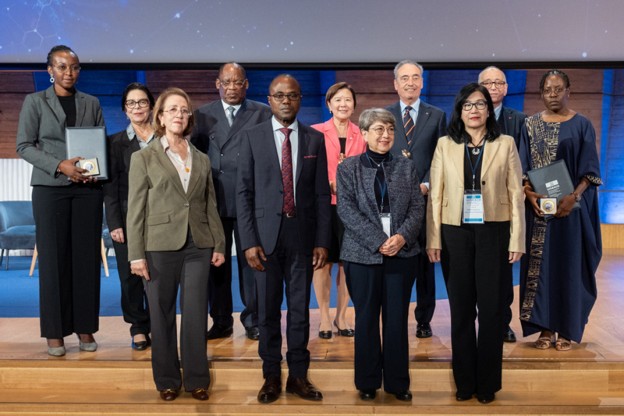
Equatorial Guinea and UNESCO Mark Ten Years of Life Sciences Research Prize
Equatorial Guinea and UNESCO have marked ten editions of their International Prize for Research in the Life Sciences. The ceremony took place at UNESCO headquarters in Paris on 6 November 2026. It recognised five researchers from China, Spain, Morocco, Cameroon and Benin for their work on major health challenges. According to the Equatorial Guinea government report, the event also featured the second edition of the African Women Scientists Fellowship Programme. Two African women received support for their research. Dr Aude Christelle Ka’e of Cameroon studies HIV in children and resistance to treatment, while Dr Azizath Moussiliou of Benin researches malaria and prevention methods. Their recognition highlights the contribution of African scientists to addressing health challenges that affect communities across the continent.
The main prize recognised three scientists whose work covers Alzheimer’s disease, tuberculosis and antibiotic resistance. Dr Nancy Yuk-yu Ip of China was honoured for research that has improved understanding and early detection of Alzheimer’s disease. Professor Carlos Martín Montañés of Spain received recognition for his contribution to the development of a tuberculosis vaccine that has reached advanced clinical testing. Meanwhile, Professor Adnane Remmal of Morocco was recognised for developing OLIPEN, an antibiotic treatment approved for clinical use in Morocco. The three researchers share a prize of US$300,000. The UNESCO announcement of the 2026 winners provides further details about their work. In addition, the Hong Kong University of Science and Technology highlights Professor Ip’s research into Alzheimer’s disease and the development of blood-based tests for earlier detection. These achievements show how scientific research can help improve the prevention, diagnosis and treatment of diseases.
However, international awards must lead to stronger research and better healthcare in Africa. African scientists need funding, modern laboratories, well-equipped universities and opportunities to develop their discoveries. The African Women Scientists Fellowship Programme provides one form of support. It gives two selected researchers grants of US$25,000 each to advance their work. According to UNESCO’s programme information, the initiative was established in 2024 to support young African women in life sciences and strengthen their role in scientific development. Equatorial Guinea has also proposed linking award-winning researchers with national universities to encourage research and knowledge sharing. The official UNESCO ceremony report highlights the wider goal of strengthening scientific leadership in Africa. Ultimately, African countries must invest in their researchers and institutions. The continent needs the capacity to develop its own medicines, improve disease prevention and produce scientific solutions that serve its people.





